top of page

News & Insights

Filter items with label

Search by term

Reflections on COP 21 Outcomes COP 21 is over and the world has agreed to “holding the increase in the global average temperature to well below 2°C above pre-industrial levels and to pursue efforts to limit the temperature increase to 1.5°C above pre-industrial levels.” “Clean energy has passed the tipping point, and its gone mainstream” – The National, CBC Sure, we could focus on the lack of legally binding emissions reductions, but what is important about the Paris Agreement is that the story has changed. The agreement marks a historical milestone in an evolving global consensus around the urgency, and inevitability, of transition to a clean energy future. Here’s a line from The National’s recent feature Canada’s Clean Energy Race  : “Clean energy has passed the tipping point, and it’s gone mainstream.” On December 1 st  the Economist released a podcast  interview with Premier Notley, from COP 21, focused primarily on the new carbon tax. A year ago every part of that sentence would have sounded ludicrous. Under the headline   It’s adapt or die for Canada’s energy sector , The Toronto Star warned oil sands producers not to become the next Kodak, the camera giant who found its product obsolete after passing on early versions of the digital camera. The Star cautioned energy companies that “it would be a mistake to underestimate the speed of transition to a low-carbon economy just because previous energy transitions took decades to catch fire.” Granted, coverage of clean energy and the need for climate action always picks up during COP  climate negotiations, but the tone was different this time. Rather than focussing on the difficulty and cost of transition, these pieces emphasize the imminence of transition. Canada certainly showed up differently to the negotiations, with representatives of all provinces and major political parties welcomed to attend and participate. This doesn’t mean that they all agree on the same approach to combating climate change, but it does signal a new willingness to work together. Canada has pledged to cut its emissions by 30 per cent from 2005 levels by 2030. — As explained in Chad Park’s What Does The Alberta Climate Leadership Announcement Mean For The Energy Futures Lab?  blog entry, the context and outlook for energy transition in Alberta  was very different two years ago when the Energy Futures Lab was conceived. The recent policy changes give the Lab a head start, widening the scope of what is possible for its innovation agenda at a time when the global energy system is being transformed right in front of us. It is difficult to recognize a rapid historical shift when you’re living through it, but it really does feel like that’s what is happening. Just as we’re kicking off the EFL with amazing policy momentum out of the gate, the same is happening in the cultural space. As the examples above illustrate, the public narrative is already changing, and the EFL is perfectly poised to strengthen and build on it. — Public engagement is a huge part of the Lab. Albertans are already among the planet’s most energy literate populations. With major media outlets laying cultural groundwork for the embracing of clean energy, the scene is set for the EFL to help Albertans engage in the conversation in a way that showcases and builds our global leadership. Over the next few years, in communities across the province, people will be invited to engage with their energy system in ways they never have before, including learning opportunities and interactive simulation games that allow players to explore energy system interventions. While the EFL Fellows make tangible strides in the form of partnerships, business models, and other innovations that directly benefit the organizations they represent, they will at the same time be examples, providing inspiration and a practical roadmap to the rest of the province. This diverse group will be a vanguard of innovation, demonstrating what working across traditional boundaries can achieve in the energy space, with their accomplishments chronicled and broadcast via organized and concentrated media support (including this blog). As early adopters of a new model of collaboration, the Fellowship will be on the front lines of the transition, pushing the boundaries of the possible, and working to accelerating the mainstreaming that is already underway. #Culture_Shift #Fellowship #2015 #EFL_Platform

The energy transition culture shift is already here

Reflections on COP 21 Outcomes COP 21 is over and the world has agreed to “holding the increase in the global average temperature to well below 2°C above pre-industrial levels and to pursue efforts to limit the temperature increase to 1.5°C above pre-industrial levels.” “Clean energy has passed the tipping point, and its gone mainstream” – The National, CBC Sure, we could focus on the lack of legally binding emissions reductions, but what is important about the Paris Agreement is that the...

This past Sunday I attended briefings and the big announcement about Alberta’s new Climate Leadership Plan. Many friends of the Energy Futures Lab (EFL) were also in attendance – Fellows, partners, and Steering Committee members. I was asked on a number of occasions, “what does this mean for the Energy Futures Lab?” The question arises because the Energy Futures Lab was originally conceived almost two years ago in a vastly different context. The kinds of policy announcements we heard this week were not at all on the radar, and the public narratives were dominated by polarized debates. What a difference a few months can make. The short answer:  This is excellent news for the EFL and only increases the timeliness of the initiative. The chance for the EFL to have a major impact have increased dramatically with this big shift in the policy landscape. The convening question for the EFL is: how can Alberta’s strengths in today’s energy system serve as a platform for the transition to the energy system that the future requires of us? A key word in this question is transition.  The Alberta Climate Leadership policies have now clearly defined the rules of the game for many elements of the transition. Transition is now public policy, and we now have some of the important timelines and parameters. In the old world, the EFL Fellows might have spent a good portion of their collaborative effort advocating for the kinds of policy changes that would remove barriers and help scale the innovations being created in the Lab. Now, the bulk of those policies are in place just as we’re getting out of the starting gates.  It’s like a giant gust of wind filling the innovation sails of the Lab. With the transition policy context so firmly in place, we can focus our efforts less on public policy advocacy, and more on social, technological, and financial innovations as well as the new partnerships needed to make the transition happen. Moving forward, together The Fellowship is made up of dozens of innovators and influencers from across a wide spectrum of groups who touch the energy system in different ways. They will work together in an innovation ecosystem over the next three years to generate new partnerships, business models, prototypes, resource flows, collaborations with First Nations, and other initiatives to help accelerate the transition. We can already see that a number of early prototypes generated in the first workshop are directly relevant to specific policy elements in the Alberta Climate Leadership framework. For example, one group has already initiated an early prototype on rapidly decarbonizing oil sands production – directly relevant in light of the newly announced 100MT oil sands emissions cap.  Another group has formed to prototype innovative new financing mechanisms for renewable energy – highly relevant in light of the announcement to replace the province’s coal-fired power production with renewable energy. A second big reason for optimism relates to the broader cultural landscape. The Government of Alberta will need to engage Albertans in a way that builds on the support expressed by many parties this week in order to help solidify this policy direction in our provincial culture. Here, too, the Energy Futures Lab will be a big help. The public engagement activities of the EFL will capture imaginations and engage new constituencies in understanding and connecting with energy transition. The Lab will help Albertans feel that energy transition is something they are a part of, instead of something being done to them. Game Changers: The Energy Futures Lab Fellows This starts with the Fellows. This amazing, diverse group will become some of the leading public voices for energy transition in the province. Their work and stories will reach across multiple platforms and channels, beginning with their own networks and constituencies.  Direct public engagement activities, including an energy transition simulation game and a series of in-person and online learning experiences will offer multiple ways for people and organizations across Alberta to engage and connect. Finally, how prepared do organizations feel they are for the new world? The recent announcement will leave many with an urgent need to pay far greater attention to the strategic implications of energy transition for their organizations. The organizational engagement stream of the EFL, currently being piloted with Suncor Energy, will ultimately offer organizations opportunities to draw on the content and insights of the EFL to engage their teams in an internal process that mirrors the experience of the EFL Fellows. In short, the Energy Futures Lab is poised to become a key vehicle to support implementation of the policy direction announced this week and offers a way to meaningfully engage Albertan organizations and citizens in the exciting new direction set out by the Government of Alberta. I know I’m not the only one involved with the Energy Futures Lab feeling very fortunate to have the opportunity to play a meaningful role in helping usher in the future that is calling to us. “The Alberta Climate Leadership policies have now clearly defined the rules of the game for many elements of the transition. Transition is now public policy, and we now have some of the important timelines and parameters.” #Culture_Shift #Fellowship #2015 #EFL_Platform

What does the Alberta Climate Leadership announcement mean for the Energy Futures Lab?

This past Sunday I attended briefings and the big announcement about Alberta’s new Climate Leadership Plan. Many friends of the Energy Futures Lab (EFL) were also in attendance – Fellows, partners, and Steering Committee members. I was asked on a number of occasions, “what does this mean for the Energy Futures Lab?” The question arises because the Energy Futures Lab was originally conceived almost two years ago in a vastly different context. The kinds of policy announcements we heard this...

The Energy Futures Lab (EFL) has announced the names  of the Energy Futures Lab Fellows – 40 influencers from industry, NGOs, government, academia, and First Nations communities across Alberta, who will work together over the next three years to help accelerate the transition to a sustainable, resilient energy system. These leaders have come together because they believe that how we tackle the interconnected issues of climate change, energy security and sustainable development is key to Alberta’s future prosperity. On Sunday, Premier Rachel Notley outlined a vision in which Alberta becomes “one of the world’s most progressive and forward-looking energy producers.” In the wake of the Government of Alberta’s historic announcement of its Climate Leadership Plan  it is clear that Albertans are ready to step beyond polarized debates and be part of a constructive process to shape the future. “The future is never just a continuation of the past. This is especially true for the future of our energy system,” says Lab Director, Chad Park, “There are great implications for Alberta. We can either help shape the future or cope with it.” Underlying the Energy Futures Lab is a shared conviction that Alberta’s strengths and assets in today’s energy system can serve as a platform for innovation and leadership in the transition to the energy system that the future requires of us. “Alberta’s energy system requires us to be bold, fearless leaders; to collaborate in ways we never thought possible; to be deliberate storytellers; and be balanced while considering the climate, people, and economics.” – Megan Zimmerman, Energy Futures Lab Fellow and Business Development Manager of Renewable Energy & Technology at Calgary Economic Development Designed and convened by The Natural Step Canada, the Suncor Energy Foundation, the Banff Centre, and the Pembina Institute, the EFL brings together a wide diversity of experiences and perspectives from across Alberta’s energy system. The Fellows were selected based on their ability to collaborate, experiment, act as agents of change in a range of networks across the province, and for their knowledge, achievements and commitment to shaping Alberta’s energy future. Anticipated outcomes include new partnerships, business models, policy and public engagement activities. The Lab serves as a platform for ongoing experimentation and innovation that will help align and amplify existing efforts on energy transition across the province. By engaging a wide range of stakeholders and the public, the Lab will support the targets outlined in the Climate Leadership Plan including the phase-out of pollution caused by burning coal, transition to renewable energy, adaptation to carbon pricing, methane emissions reduction and remaining within the overall oil sands emission limit. This creative solution space will enable experimentation, prototyping, and scaling of new and existing initiatives to accelerate the transition to a low-carbon energy future. Over the course of the next year, the fellows will engage in a series of workshops, learning journeys and collaborative activities that will be characterized by tough conversations that challenge basic assumptions and reveal root causes of current challenges. On the approach needed for the transition to a sustainable energy system, Megan Zimmerman, EFL Fellow and Business Development Manager of Renewable Energy & Technology at Calgary Economic Development states, “Alberta’s energy system requires us to be bold, fearless leaders; to collaborate in ways we never thought possible; to be deliberate storytellers; and be balanced while considering the climate, people, and economics.” For the two years to follow, the Lab will coordinate action across a broad range of organizations and the public. Each fellow belongs to a company, community group, university, government, or not-for-profit organization that has expressed a commitment to experiment and innovate with The Energy Futures Lab. By engaging their organizations and the broader Alberta public in this important dialogue about Alberta’s future, the fellows’ ideas, discoveries and solutions will have a ripple effect. The aim is to engage wider audiences, foster new leaders, and build a pool of collaborators and diverse stakeholders to help Alberta prepare for and shape the future. We encourage all Albertans to follow us and join in this endeavour. To learn more and stay updated, please visit the website energyfutureslab.com  and register for the newsletter energyfutureslab.com/newsletter . #Culture_Shift #Fellowship #2015 #EFL_Platform

Energy Futures Lab Launches Fellowship to Shape Alberta’s Energy Future

The Energy Futures Lab (EFL) has announced the names of the Energy Futures Lab Fellows – 40 influencers from industry, NGOs, government, academia, and First Nations communities across Alberta, who will work together over the next three years to help accelerate the transition to a sustainable, resilient energy system. These leaders have come together because they believe that how we tackle the interconnected issues of climate change, energy security and sustainable development is key to...

We have come together to convene this important initiative because we believe that how we tackle the interconnected issues of climate change, energy security and sustainable development today is key to Alberta’s future prosperity. The issues are so complex that addressing them is not possible unless we are working across traditional organizational and sectoral boundaries. Underlying our collaboration is a shared conviction that Alberta’s strengths and assets in today’s energy system can serve as a platform for innovation and leadership in the transition to the energy system that the future requires of us. We also believe that we are not alone. Individuals and organizations all across our province want to step beyond polarized debates and be a part of a constructive process to prepare for and shape the future. Many are already working on these issues – applying their talents and commitment as social and technological innovators outside and within our established energy industries and other sectors, startups, governments, First Nations, universities, and non-profit organizations. Designed to accelerate the development of a “fit for the future” energy system, success for the EFL will mean that co-ordinated action across a broad range of organizations has generated tangible breakthrough outcomes that support transition toward a more sustainable and resilient energy system. To achieve this, we will bring together a cohort of leaders, Energy Futures Lab Fellows, and support them in working together both to align and amplify existing efforts and to generate new opportunities to test and scale initiatives. Ultimately, the EFL will engage thousands of individuals and dozens of organizations across the province and beyond. We invite you to join us! Chad Park Executive DirectorThe Natural Step Canada Steve Williams President and CEOSuncor Dan Buchner Vice PresidentPeter Lougheed Leadership Institute Ed Whittingham Executive DirectorPembina Institute #Culture_Shift #Fellowship #2015 #EFL_Platform

Welcome to the Energy Futures Lab

We have come together to convene this important initiative because we believe that how we tackle the interconnected issues of climate change, energy security and sustainable development today is key to Alberta’s future prosperity. The issues are so complex that addressing them is not possible unless we are working across traditional organizational and sectoral boundaries. Underlying our collaboration is a shared conviction that Alberta’s strengths and assets in today’s energy system can serve...

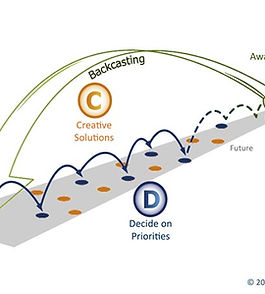
The desire to shape the future, not just cope with it or react to it, is deeply embedded in Alberta’s culture. Alberta has long been at the forefront of discovery and innovation of game-changing solutions in the energy field. Alberta’s work on technological innovations is key to resiliency of our future energy system, but it is not enough. To unlock the full range of energy system transition opportunities, Alberta will have to employ seemingly unconventional strategies and partnerships. Attention must be paid to social innovations and cultural narratives in addition to policy options and technological innovation. What if oil and gas executives worked together with clean tech innovators to chart new innovation pathways for turning CO2 emissions into useful carbon-composite materials, for an Alberta-based response to the global X Prize challenge ?  Or what if they joined forces to find new markets for biofuels generated from a company like Enerkem’s  leading edge waste-to-energy facility in Edmonton? “The rest of the world is looking to transition to a low-carbon economic future, with or without us. Alberta can sit on the sidelines, or take the action needed to ensure the continued strength of the economy.” – Shannon Phillips, Alberta Minister of Environment and Parks, at the 2015 Alberta Climate Summit, September 9. What if homegrown industry leaders like the Landmark Group of Builders worked together with municipal and provincial governments, financial institutions, and other stakeholders to remove some of the barriers to scaling up adoption of their groundbreaking net-zero homes? What if chambers of commerce, economic development agencies, and municipal and provincial governments worked together to articulate and build a next-generation concept of the “Alberta Advantage” that became the foundation for a new provincial economic development and diversification strategy? What if Albertans of indigenous heritage collaborated with environmental groups, community planners and industry to accelerate the adoption of renewable energy technologies on First Nations reserves across the province? All of this and more could be possible through the Energy Futures Lab.  All of the organizations and stakeholders listed above are involved in this unprecedented collaboration. Their work together over the coming months and years promises to expose tired stereotypes about our province and make it clear that the Alberta of the future is being born today, building on the legacy and assets of what we’ve been, and charting our own path forward. Charting our own transition path How can we work together to leverage Alberta’s leadership position in today’s energy system to help accelerate the transition to the energy system the future requires of us? We’re thrilled to be on the cusp of a process aimed at finding and acting on answers to this question with the kick-off meeting of the Energy Futures Lab  in Banff on November 1-4. In attendance were 40 Energy Futures Lab Fellows – influencers and innovators from government, NGOs, industry, academia, First Nations and community groups. Approximately 100 individuals applied to join the Energy Futures Lab, which exemplifies what a strong interest there is among energy system players to contribute to a positive, future-focused initiative about Alberta’s energy future. The Energy Futures Lab is being designed and facilitated by The Natural Step Canada, in collaboration with Suncor Energy Foundation, the Banff Centre, and Pembina Institute. Over the coming months the Fellows – a microcosm of Alberta’s energy system – will “ backcast ” by building a shared vision for the energy system of the future and evaluate where we are today relative to that future state. They will then work together to develop interventions aimed at helping bridge the gap between where we are and where we need to be.  We can’t yet know exactly what these interventions will look like, but the ideas described above only begin to scrape the surface of what this group might be able to achieve together. With the Energy Futures Lab serving as a forum for ongoing collaborative experimentation and innovation among such an impressive and diverse group , we are extremely excited about the possibilities. Please stay tuned, follow our progress , and reach out to ask about how you might get involved as the Lab’s organizational and public engagement activities are rolled out in early 2016. #Culture_Shift #Fellowship #2015 #EFL_Platform

Shaping our Energy Future: Chad Park introduces the Energy Futures Lab

The desire to shape the future, not just cope with it or react to it, is deeply embedded in Alberta’s culture. Alberta has long been at the forefront of discovery and innovation of game-changing solutions in the energy field. Alberta’s work on technological innovations is key to resiliency of our future energy system, but it is not enough. To unlock the full range of energy system transition opportunities, Alberta will have to employ seemingly unconventional strategies and partnerships....

How do you accelerate innovation to an unnaturally high pace? According to Bill Gates, in a provocatively titled We Need an Energy Miracle  piece last week from the Atlantic, society needs to ramp up innovation in order to accelerate “a transition to new forms of energy” and avoid running a global 3 or 4 degree climate experiment. His interview raised fascinating questions about the mechanics of how we might go about attempting to drive “innovation ‘at an unnaturally high pace.’” These are the exact questions that the organizers of the Energy Futures Lab (EFL) have been grappling with for the better part of two years as they prepared to launch an initiative aimed at “ accelerating the transition to the energy system that the future requires. ” “I suggest that you should set the bar at making history, and history’s waiting out there to be made. You are the right gang to do it.” – Avrim Lazar, former President and CEO of the Forest Products Association of Canada In contrast with Gates, the designers of the EFL  don’t believe that we need a miracle, but rather a radically different approach to stimulating innovation through collaboration: a blend of state-of-the-art change lab methodology with leading edge public engagement strategies, and a planning framework to guide human action within planetary limits. With these tools, the right group of influencers may have a chance at cutting through the mind-numbing polarization that characterizes ‘debates’ over the future of energy in Alberta, and leverage the province’s energy resources and expertise to become a world leading energy system of the future. The core of the Energy Futures Lab process is the EFL Fellowship , and two weeks ago, all 40 of these leaders convened for the first time in Banff. The Fellows represent incredibly diverse interests from across the energy spectrum in Alberta, including oil and gas, provincial and local government, First Nations, and non-profits. Despite their differences, they all possess a proven leadership ability and deep desire to help shape the future of Alberta. Avrim Lazar, former President and CEO of the Forest Products Association of Canada and key architect of the landmark 2010 Boreal Forests Agreement, welcomed the Fellows to the launch by reminding them of exactly what they were there to do: “I suggest that you should set the bar at making history, and history’s waiting out there to be made. You are the right gang to do it.” — Over the course of the intensive three-day session that followed, the Fellows began to lay the groundwork for this ambitious undertaking. They took stock of one another’s experiences, expertise, and motivations, gave voice to common energy narratives at play throughout Alberta, and explored efforts already underway to transform how the province produces, distributes, and uses energy. The Fellows were guided through mapping exercises to reveal barriers to change and leverage points within the energy system where small interventions may result in wide-ranging effects, and had the opportunity to pitch initiatives to the group as projects for collaboration. Predictably, given the range of perspectives in the room, the Fellows did not always see eye to eye on either problems or solutions, but that friction, the organizers emphasize, is what will give the initiatives that emerge from the Lab a robustness that would otherwise be missing. There were disagreements, debates, and some uncomfortable discussions over the course of the session, but there was also common ground. The three day session in Banff was only the first of many meetings of the Fellows slated to take place over the next year but already a number of themes are becoming apparent. This is a community bent on making history . Just about the only thing the Fellows have 100% agreement on is that the EFL is not going to be another forum for great discussion. If this isn’t about doing, they’re not interested. Engaging the public is essential to success . If actions taken by the Fellows do not find fertile cultural ground, they’ll be doomed to fail. The EFL will need to frame initiatives that are compatible with the narratives being lived by Albertans, or find ways to shift those narratives. Sharing matters . The session opened with each Fellow presenting an object that symbolized commitment to the Lab. From family photos, to a 425 million year old fossil, to a Fellowship of the Rings DVD, what each brought said something authentic about themselves and was an investment of trust in the group. The value of the relationships forming out of this trust is difficult to quantify but absolutely essential to effective coordinated action. A number of questions and tensions are also emerging from the process. Fellows and Lab organizers have until January to ponder these before they meet again in Edmonton. How deeply does a group of actors need to understand the complexity of the Alberta energy system in order to identify high-leverage opportunities for change and effectively forecast barriers? Where do we draw the boundaries around our attempts to map such a complex system? To what extent must a group of collaborators share a common vision of success in order to effectively coordinate action?  Certainly, we can all agree that a future energy system must be sustainable, but how important is it that we all hold the same definition of sustainability? The possible rewards are vast, but the ambiguities of the Lab process can sometimes be frustrating for participants. How can we balance the desires of an action-oriented group, accustomed to pursuing specifically defined goals, with a process that, according to change lab guru Adam Kahane, is “emergent, unfolding, but almost never according to plan?” — In the coming months I’ll be following developments in the Energy Futures Lab, touching base with a number of the Fellows, and tracking EFL public engagement efforts. If the aim is history making, consider me a primary source chronicler with an inside track on events as they take shape. I am honoured and excited about the opportunity to play a role, however small, in the effort to accelerate innovation in Alberta an unnaturally high pace  and I cannot wait to see how it turns out. #Culture_Shift #Fellowship #2015 #EFL_Vision #EFL_Platform

Recapping the First Energy Futures Lab Workshop

How do you accelerate innovation to an unnaturally high pace? According to Bill Gates, in a provocatively titled We Need an Energy Miracle piece last week from the Atlantic, society needs to ramp up innovation in order to accelerate “a transition to new forms of energy” and avoid running a global 3 or 4 degree climate experiment. His interview raised fascinating questions about the mechanics of how we might go about attempting to drive “innovation ‘at an unnaturally high pace.’” These are...

A blog from Energy Futures Lab Fellow Alex Nnamonu As Alberta begins grappling with the energy challenges of the 21st century, Alex Nnamonu, Executive Director of Major Legislative Project and Strategic Planning at Alberta Municipal Affairs is thinking beyond technology, beyond numbers… “A desirable future is one which is not dominated by “all-or-nothing” thinking, but one which delivers win-win outcomes. Energy Futures Lab is an opportunity, an unusual opportunity for people to start talking, start sharing information.” – Alex Nnamonu He’s thinking about soccer. Growing up in Nigeria, he recalls, “you play soccer in a little patch of ground and when you came back six months later, it was gone. There was a building there or a road there. The actual soccer field became some kind of gravel pit. For me one key parameter for responsible development is that it’s tied to what citizens feel, need and want. As a child, there was development happening, there was growth happening, but there was no longer a place to play soccer.” As a Fellow of the Energy Futures Lab, Nnamonu will join a lively and challenging new initiative that brings together leaders from across provincial government, industry, and civil society to address the pressing challenges of Alberta’s energy system. They will explore these challenges while considering the needs of the environment, economy and communities. The goal of the Lab, convened by The Natural Step Canada in collaboration with Suncor Energy Foundation, the Banff Centre, and Pembina Institute, is to develop practical, actionable solutions that start the transition of Alberta’s energy system to a sustainable one. Thinking of Alberta’s energy future, Nnamonu states, “People should be able to thrive where they live. I see a future where citizens have more tools, more information to participate actively in that dialogue. I believe an opportunity exists to move beyond the simple notion of trade-offs, winners and losers to a different plane of true innovation in terms of becoming world leaders in pursuing resource extraction the right way and adapting or changing when appropriate to do so.” Fellows of the Energy Futures Lab include representatives from government, NGOs, industry, academia, First Nations and community groups. Together, they will develop practical and innovative solutions to transition Alberta to a sustainable energy system. With Nnamonu’s extensive experience managing multi-stakeholder initiatives and using data to gain system-wide insights, he will be a valuable part of the 40 person team. “A desirable future is one which is not dominated by “all-or-nothing” thinking, but one which delivers win-win outcomes.” states Nnamonu, “Energy Futures Lab is an opportunity, an unusual opportunity, for people to start talking, start sharing information.” #Culture_Shift #Clean_Technologies  #Fellowship #Alberta_Energy_Narrative_Hearts_and_Minds #2015 #EFL_Platform

What does a thriving energy system look like?

A blog from Energy Futures Lab Fellow Alex Nnamonu As Alberta begins grappling with the energy challenges of the 21st century, Alex Nnamonu, Executive Director of Major Legislative Project and Strategic Planning at Alberta Municipal Affairs is thinking beyond technology, beyond numbers… “A desirable future is one which is not dominated by “all-or-nothing” thinking, but one which delivers win-win outcomes. Energy Futures Lab is an opportunity, an unusual opportunity for people to start...

Sir Winston Churchill once famously said that we should never let a good crisis go to waste. Never was this truer for Alberta than today. As the reality of sliding oil prices settled in last year, Premier Jim Prentice described the province’s fiscal situation as “the most challenging financial and economic circumstances we’ve seen in our province in a generation.” The Economist magazine recently used a similar turn of phrase when it called on governments around the world to take “the once-in-a-generation opportunity” to implement smarter energy policies, including putting a price on carbon emissions. In Alberta, the temptation will surely be to revert to the policies of the past, or to consider only incremental adjustments to current policies. In part this is because the cultural narratives that shaped those policies are so strong. Jobs versus the environment. No provincial sales tax in Alberta. National Energy Program. As goes the oil business, so goes our economy. But as our province grows and our demographics change, more and more Albertans are questioning the old storylines, asking how well they mesh with the realities of a rapidly evolving world. For example, public opinion polls show most people strongly favour the middle ground in the polarized debates around energy and resource development, even though the dominant public narrative still suggests that the poles offer us our only choices. Most of us just want to ensure that our children and grandchildren have the same or better opportunities for a good life as we have today. It’s the same ethic that Alberta brought to the national consciousness when Preston Manning and his colleagues reminded us of the consequences of our growing national debt in the 1980s and 1990s: We shouldn’t borrow from the future to pay for today. When it comes to energy issues, there is no hypothetical sweet spot that perfectly balances environmental, social and economic concerns. But we can find solid middle ground for the majority by thinking about transition. How can Alberta’s strengths and assets in today’s energy system serve as a platform for innovation and leadership in the transition to the energy system that the future requires of us? Even in the absence of clear policy direction, many Albertans are already working with a “transition” vision in mind. Applying their talents and commitment as social and technological innovators, they work both outside and within our established energy industries and other sectors, startups, universities, municipal governments, and non-profit organizations. The City of Edmonton’s Energy Transition Strategy  is just one among many fine examples of Albertan institutions readying themselves for a much different energy future. Another inspiring example is the Landmark Group, a successful home builder now also a renewable energy provider. Innovators like these are writing some of the new Alberta narratives. To support them, we need to consider today’s public policies and investments not by weighing the environmental cons against the economic pros, but in light of their strategic potential for taking us toward the sustainable, resilient energy system we will need to be as successful in the 21st century as we were in the 20th. This is environmental leadership as a source of economic opportunity. A new provincial climate change framework and an energy sustainability strategy are both due to be released later in 2015. They represent a tremendous opportunity to set a clear direction and demonstrate Alberta’s vision and commitment. Meanwhile, let’s consider the next provincial budget. What if we used this moment to fundamentally address the inherent risk of a provincial budget that is so tied to the price of a single global commodity over which we have no control? What if, building from our strengths and the legacy of all that we’ve accomplished, we used this moment to prepare ourselves for the carbon-constrained future we know is coming? What if we constructed a provincial budget that assumes oil prices at today’s levels and then, when the prices do eventually rise, we save the ensuing surpluses for investment in continued Albertan leadership in that future? #Culture_Shift #Regional_Pathways #Alberta_Energy_Narrative_Hearts_and_Minds #2015 #EFL_Platform

Seize the inter-generational moment, Mr. Prentice

Sir Winston Churchill once famously said that we should never let a good crisis go to waste. Never was this truer for Alberta than today. As the reality of sliding oil prices settled in last year, Premier Jim Prentice described the province’s fiscal situation as “the most challenging financial and economic circumstances we’ve seen in our province in a generation.” The Economist magazine recently used a similar turn of phrase when it called on governments around the world to take “the...

Energy Futures Lab Logo White

We gratefully acknowledge the original territories of the Siksikáwa, Îyârhe Nakodabi, and Tsuut’ina Dene, of Mohkínstsisakápiyoyis, Wincheesh-pah, Kootsisáw, or the colonized lands which many now refer to as Calgary, where the Energy Futures Lab is headquartered. These Lands are also home to members of the Métis Nation of Alberta under the Otipemisiwak Métis Government — District 4 & 5, whose peoples have deep relationships with the land. This reminds all of us to walk in a good way and remember our commitments to Indigenous Peoples.

Get in Touch

Subscribe

Sign up for our newsletter to stay updated on all the latest news and events

About Us


The Energy Futures Lab is a platform for shaping the people-powered solutions to Canada's most complex energy challenges.

bottom of page