top of page

News & Insights

Filter items with label

Search by term

Part One: The Latest International Developments Following last month’s GLOBE Conference  in Vancouver, Energy Futures Lab Director Chad Park caught up with two members of the Energy Futures Lab Advisory Council, Tzeporah Berman and Toby Heaps, both of whom had important roles at GLOBE and its surrounding events. The following is part one of the three-part discussion and focuses on some of the big international developments that Tzeporah and Toby believe are changing the playing field for the global energy system. Part two explores infrastructure and policy to guide energy transition, and part three focuses on specific considerations and opportunities for Alberta’s energy future. Toby Heaps  is the CEO and Co-Founder of Corporate Knights, CK Capital and the Council for Clean Capitalism. He spearheaded the first global ranking of the world’s 100 most sustainable corporations in 2005, and in 2007 coined the term “clean capitalism.” He sits on the Sustainability Accounting Standards Advisory Board and the University of Toronto’s Environment and Finance Committee. He is also is a member of the Advisory Council for the Energy Futures Lab. Tzeporah Berman  BA, MES, LLD (honoris causa) has been designing environmental campaigns and working on environmental policy in Canada and beyond for over twenty years.  She is an Adjunct Professor of York University Faculty of Environmental Studies and works as a strategic advisor to a number of First Nations, environmental organizations and philanthropic foundations on climate and energy issues. Tzeporah co-chairs a small oil industry/ENGO problem solving forum in Alberta on oil sands policy and was appointed last year to the BC Government Climate Leadership Team. She is a member of the Advisory Council for the Energy Futures Lab and is the former co-director of Greenpeace International’s Global Climate and Energy Program and Co-founder of ForestEthics. Chad:  Both Tzeporah and Toby are recognized leaders on the global stage in their respective areas of expertise – Tzeporah as a prominent environmental activist and Toby as an expert and advocate in the role of capital markets and institutional investors in sustainable development. They each have strong personal ties to Alberta and also bring a global perspective. Whether or not we agree with all of their views, I believe it is important to consider this perspective as the Energy Futures Lab ponders how Alberta will position itself and evolve in the rapidly changing global energy system. Chad:  Let’s discuss the major international developments and events in recent months that promise to have a big influence on energy policy both in Canada and globally. Events like Paris, Davos and GLOBE in Vancouver – you two have been a part of these events in one way or another. What do you think is important for people to know coming out of them? Toby:  The key thing for people to know from the Paris climate talks is that in an unprecedented move, 195 countries all agreed to usher in a zero net carbon economy sometime this century. That’s a total game changer. At zero net emissions, there’s not a lot of room for burning fossil fuels, unless we have many advances in carbon capture and use technology. I don’t think it has totally sunk in, how unprecedented this is. It was way beyond what I expected to happen. Of course, it’s not legally binding, but these things are more meant to establish new norms and understandings of what the world is going to look like. These agreements send signals to markets to start factoring in new realities and expectations. Tzeporah:  I agree. I think we’ve seen a few game changers in the past year. For one, there is now a recognition of the urgency of climate change. This is now mainstream and the era of climate denial is over. The Alberta Climate Plan is a great example of this. It’s the first time that major oil companies stood up and acknowledged that they’re going to have to support significant climate policy, not just generic statements about carbon pricing. We’re seeing a huge shift in the narrative around climate change, which also has its new challenges. I think while the era of climate denial is over, we’re now in the era of “yes, and” or “yes, but.” It’s still a complex conversation and there are still people dragging their feet, but we’re starting to have the same conversation now. We’re starting to ask the right questions together, both in Canada and internationally. I would say the second game changer is the emergence of a serious conversation around a carbon budget. Science is now telling us that two-thirds of remaining fossil fuel reserves need to stay in the ground if we’re going to keep the world at safe climate levels. Now, the majority of the world’s governments are not just arguing for 2 degrees, but are talking about 1.5 degrees to ensure a climate safe world. Toby:  In addition to narrative changes, there is also a really interesting dance going around in terms of market expectations. Most of the market is expecting a slow pulse year round with respect to how we’re going to price emissions and regulate away certain types of things like thermal coal. The market is looking at this and saying, “Okay, it’s going to happen but it’s not going to happen tomorrow and we’ll have some time to adjust.” What changed after Paris was the market saw that this is going to happen in a more pronounced fashion, more quickly than we thought just a month ago. What this is ultimately doing is creating room for companies that want to build a bridge to a new energy future to now announce some pretty bold moves that they wouldn’t have for fear that it would affect their share price. Tzeporah:  The bottom line is that these companies in the past were banking on climate policy failure. Reports from several major oil companies, where if you dug into why they were not responding to the carbon bubble analysis and the issues around carbon budget, it was because they simply did not believe that the world would get its act together and that climate policy was a serious threat to developing greater reserves. Now, post-Paris, they are looking at the writing in the wall saying, “Oh, in fact, that wasn’t a very safe bet of ours.” Toby:  Probably the most interesting takeaway from Davos wasn’t in the headlines, but it was that the Carbon Tracker  was there. The folks that pioneered the notion of the carbon budget are out to popularize it. They held a lunch and a surprise guest showed up at lunch. It was the chairman of one of the largest coal companies in the world, Tony Hayward from Glencore. The fact that he showed up to this lunch is pretty suggestive of how fast this issue has moved. He wouldn’t even have had 10 minutes to listen to those guys before. He’s there now because his investors are starting to tip the stock card. He’s there because he has to be there. #Culture_Shift #Clean_Technologies #Future_Economy #2016 #CCUS #Sustainable_Finance

Thought Leaders Series | Toby Heaps and Tzeporah Berman

Part One: The Latest International Developments Following last month’s GLOBE Conference in Vancouver, Energy Futures Lab Director Chad Park caught up with two members of the Energy Futures Lab Advisory Council, Tzeporah Berman and Toby Heaps, both of whom had important roles at GLOBE and its surrounding events. The following is part one of the three-part discussion and focuses on some of the big international developments that Tzeporah and Toby believe are changing the playing field for the...

Reflections from our Energy Futures Lab Fellows As a fourth generation Albertan and Manager of CSR & Sustainability at Enbridge, MaryAnn Kenney has a deep understanding of the energy system here and respects “everything that the individuals and companies have built to create the current energy system.” At the same time, she believes “with the information we now have about climate change – and the information we have had for a long time about energy inequity– we can no longer continue operating under the status quo”. MaryAnn is one of 40 influential leaders from across Alberta’s energy system selected for the Energy Futures Lab (EFL) Fellowship. She will join representatives from industry, government, First Nations groups, and NGOs to begin to chart a path for the province towards an energy system characterized by sustainability, resilience, and innovation. “We have a lot going for us,” MaryAnn states on the political will, entrepreneurial spirit, technological expertise, and potential for renewable energy in Alberta. With all of these key ingredients, she believes the province is well positioned to be a leader in energy innovation. Linda Coaty, Enbridge’s Chief Sustainability Officer with Enbridge shares her enthusiasm for MaryAnn’s involvement in the Lab: “MaryAnn is passionate about her home province of Alberta, and about how its various stakeholders can work together to find energy solutions that align with the emerging social, economic and environmental demands of the 21st century. I am certain that she will be an asset to the work at hand, and that her participation will create value for our company and stakeholders.” #Culture_Shift #Fellowship #2016

MaryAnn Kenney: Working Together to Create Innovative Solutions

Reflections from our Energy Futures Lab Fellows As a fourth generation Albertan and Manager of CSR & Sustainability at Enbridge, MaryAnn Kenney has a deep understanding of the energy system here and respects “everything that the individuals and companies have built to create the current energy system.” At the same time, she believes “with the information we now have about climate change – and the information we have had for a long time about energy inequity– we can no longer continue...

A group of Fellows visits Landmark Group/AcQbuilt’s innovative net-zero home production facility before engaging with founder and CEO Reza Nasseri and the Landmark transition story (Edmonton, Jan 2016) “It’s easy for people to have opinions, and be wildly pro or against something. But Fort McMurray is the literal front line of our national energy industry. It’s the bleeding edge of the boom bust cycle, that’s what this community experiences. I think it’s really important for people, when having a provincial or even national energy system conversation to have a bit of an experience of what it’s actually like up there.”  - Sean Collins Can we credibly explore the energy transition in Alberta and not visit Fort McMurray? Next month the EFL Fellows are coming together for their third in-person workshop. This time they are setting aside their busy schedules and journeying to the city that in many ways is a ground zero for the big issues and debates about the province’s energy future. For years, Fort McMurray and the vast oil sands resource surrounding it, have been a focus of criticism nationally and internationally and the poster child for those highlighting Canada’s reputation as a laggard on climate policy, spurring visits from the likes of James Cameron, Leonardo DiCaprio, and Desmond Tutu. These visits have often intensified the polarization around energy, climate and the future role of these high carbon resources. EFL Fellow Sean Collins, born and raised in Fort McMurray, is looking forward to having his Lab colleagues join him in his hometown next month. “It’s easy for people to have opinions, and be wildly pro or against something. But Fort McMurray is the literal front line of our national energy industry. It’s the bleeding edge of the boom bust cycle, that’s what this community experiences. I think it’s really important for people, when having a provincial or even national energy system conversation to have a bit of an experience of what it’s actually like up there.” We agree. The first day and a half in Fort McMurray will be spent on “Learning Journeys” before the Fellows take the new insights garnered from these explorations to refine their prototypes and high leverage lab initiatives in the 2-day workshop that follows. Learning journeys are an opportunity for the Fellows to broaden and deepen their understanding of the current system, and to engage with a diversity of people and perspectives that they are not regularly exposed to. In Fort McMurray, the EFL Fellows won’t be exposed to ‘canned’ presentations, but rather hosts and visitors engaging in open and honest dialogue. Interacting with real people and real communities ensures that the challenges and complexity we are trying to address in the Lab don’t just exist on paper or in our heads, but that we also have some lived experience of them. These are journeys outside of our day-to-day experiences and narratives, and outside of our own assumptions and paradigms. That may sound exciting or it may sound scary, but we do know this is an essential part of the hard work of collaborating with diverse stakeholders on our most complex challenges. We applaud the Energy Futures Lab Fellows for stepping directly and bravely into this inquiry. They will be wrestling with some of the toughest questions around energy transition from numerous angles – the role of fossil fuels in a low carbon future, the possibilities for resilience in resource dependent communities, and so on. The future of a high carbon resource in a low carbon economy A group of fellows will see the footprint of the oil sands from the air, tour an oil sands mine and visit Ft McKay to engage with a variety of community members affected in different ways by oil sands development. Whether fellows have made countless trips to Fort McMurray or will be visiting for the first time, they will be challenging one another to ‘see with new eyes’, and to avoid letting the experience simply reinforce pre-existing narratives. For example, can the engineers in the group who may tend to be wowed by the engineering marvel of the oil sands view it through the lens of an aboriginal elder as ‘keeper of the land’, or perhaps take the perspective of a future generation? Building community resilience in a time of energy transition Meanwhile, another group of fellows will visit some of the community’s social service organizations – shelters, employment agencies, food banks, and engage in dialogue with Mayor Melissa Blake. Others will tour a local First Nation-owned and operated company, and engage further with the Regional District, the business community and the region’s Social Prosperity road map. They will be wading into debates about whether this is a time to grin and bear it and hope for an oil price rebound, or whether this is a moment to tackle some of the tougher, deeper questions around resilience, transition and our shared future. We expect to uncover many challenges, and also to be inspired by some new ideas for solutions. Undoubtedly there will be numerous lessons that are equally applicable to other towns across Alberta – from Medicine Hat to Grande Prairie, Hanna to Rocky Mountain House. And of course there are things that are unique to Fort McMurray as well. When I asked EFL Fellow Sean Collins what not to miss when we visit his hometown he replied, “Don’t miss the raw emotion of Fort McMurray. It’s different. People swear, people are rough around the edges. And people are super genuine and caring. I find Fort McMurray to be a more unpolished version of the rest of Alberta. To get an accurate portrayal of Fort McMurray, I wouldn’t try to polish the edges too much.” #Culture_Shift #Regional_Pathways  #Fellowship #Alberta_Energy_Narrative_Hearts_and_Minds #Community_Resilience #2016

Alison Cretney: Why is the Energy Futures Lab Going to Fort McMurray?

A group of Fellows visits Landmark Group/AcQbuilt’s innovative net-zero home production facility before engaging with founder and CEO Reza Nasseri and the Landmark transition story (Edmonton, Jan 2016) “It’s easy for people to have opinions, and be wildly pro or against something. But Fort McMurray is the literal front line of our national energy industry. It’s the bleeding edge of the boom bust cycle, that’s what this community experiences. I think it’s really important for people, when...

Diversity of opinions makes us stronger as families, Lab participants and frankly, as a nation. Our unique life experiences and narratives are not what define our separateness but are critical contributions to a more realistic, whole view of a system. With the support of the Alberta Real Estate Foundation  we’ll be taking The Newtonian Shift across Alberta by invitation of municipalities, businesses, and other organizations. I have a big family—sixteen aunts and uncles and many, many cousins. Thanks to our grandparents we all seem to share a passion for debate. One of the more heated and reoccurring discussions is on the topic of climate change. This is not surprising given I have generations of family members working in the Alberta oil sands as engineers, marketing executives, and environmental assessments experts. I also have family members who lead environmental organizations and who have been on the front lines of pipeline protests and the divestment movement. My family is not unique. In boardrooms and around kitchen tables across Canada we are grappling with competing narratives. Like most debates, we are generating the kinds of insights needed to drive change, but we are also entrenching the positions that keep systems stuck in old patterns. Enter the Energy Futures Lab (EFL) and the Energy Futures Fellows. These 40 diverse experts are committed to the difficult conversations that are necessary to create breakthrough business models, and ‘future-fit’ policies and practices. As bellwethers and cultural influencers they are willing to share these big conversations with their networks – families, colleagues and communities. The Fellows do not yet agree on the specific innovations needed or the policies that will lead to the energy system of Alberta’s sustainable future, but they do agree that it is vitally important to engage Albertans in the conversation. This is what sets EFL apart from other system changing labs. Traditional labs have been built around a Chatham House Rule approach. Difficult, complex conversations are facilitated among a tight group where individuals experience transformational leadership opportunities, and build mutual trust. This leads to new collaborative approaches and initiatives. However, many past lab participants have found reintegrating into their organizations and businesses more difficult than expected. Their colleagues, families, and communities have not taken the same journey or experienced the same shifts in perspective. They have not been exposed to the same new ideas. What looked promising from inside the lab runs into real world resistance. The EFL is taking a different approach by opening the space to broader conversations. The Lab is guided in part by the Geels multi-level perspective on transitions. Frank Geels, a Dutch researcher, examined how disruptive technology, such as the car, came to shape global culture and massively shift human behaviour. In his seminal work, Geels identified three levels that must be affected in order for system-wide change to occur: Culture – is made up of the dominant paradigms (narratives) and shared mental frames (values) that underlie an entire system. It is culture that shapes goals and definitions of success. Regimes – are the political, economic and social institutions, regulatory frameworks, infrastructures and technologies, (rules of the game) as they exist. Together these pieces make up complex societal and economic systems that tend to be resistant to change. Niches – are protected spaces in which innovators are able to experiment with new technologies and approaches that challenge the dynamics of the current system. They often fail to infiltrate the system because of stabilizing feedback loops between culture and regimes. Adapted from Geels, F et al., (2012) Culture plays an essential role in allowing models that exist at the niche level to scale and take hold in regimes. Shifts at the cultural level can support new innovations from the niche level, enabling and facilitating change in regimes. Most system change processes focus almost exclusively on technological innovation and large-scale policy shifts to integrate and scale innovations. The EFL recognizes that engaged citizens co-create a receptive culture, and that this is essential to the long-term success of new innovations. This is democracy at its best and a model for the world. The EFL design has two strategies to engage Albertans and is adding more as Fellows identify new ways to connect with communities across the province. First, in the Fellows’ second workshop in January, they prioritized a long list of topics to facilitate “big conversations” with the media and other public channels. They also identified other influencers with distinct viewpoints to engage in dialogue over the next six months. Such conversations will continue to roll out over the course of the Lab, and our hope is that it will spark conversation amongst Albertans at home and at work. Secondly, and more directly, is the Energy Futures simulation game, The Newtonian Shift . The game allows individual Albertans with or without direct experience in the energy system to play key decision-making roles in a simulated energy system. The more than 30 roles in the game include oil, gas and renewable energy executives, mayors of cities and rural communities, coal and steel company marketing executives, and key leaders of First Nations and NGOs. In our polarized cultural space the game invites individuals to experience the system from multiple vantage points. It is surprising how real life situations are mirrored in the game, and how an entrenched perspective can dramatically shift when complexity and pressure are applied. Many players state that it is the closest they have come to putting themselves in someone else’s shoes. In the extensive debriefing session following the game the dominant theme is that each player has new insights and empathy for the role they played. And they express an appreciation for how difficult, convoluted and necessary it is to be working together to achieve a thriving, prosperous and sustainable future. We call this the “radical middle”. With new experiences and perspectives we can co-create a space where we build trust and begin to strategize on a desired future where our children and grandchildren can thrive. Diversity of opinions makes us stronger as families, Lab participants and frankly, as a nation. Our unique life experiences and narratives are not what define our separateness but are critical contributions to a more realistic, whole view of a system. I believe my grandparents, who are part of the generation that rolled up the sleeves and built health care and education systems for their communities, would likely say “finally – now get on with it!” References Frank W. Geels, Rene Kemp, Geoff Dudley and Glenn Lyons. (2012). Automobility in Transition? A Socio-Technical Analysis of Sustainable Transport.  http://www.sustainabilitytransitions.com/files/Automobility%20in%20Transition%20-%20Content%20+%20Preface%20+%20Introduction.pdf #Culture_Shift #Fellowship #Alberta_Energy_Narrative_Hearts_and_Minds #2016 #The_Newtonian_Shift

Meeting in the Radical Middle: Shaping a New Energy Futures Narrative

Diversity of opinions makes us stronger as families, Lab participants and frankly, as a nation. Our unique life experiences and narratives are not what define our separateness but are critical contributions to a more realistic, whole view of a system. With the support of the Alberta Real Estate Foundation we’ll be taking The Newtonian Shift across Alberta by invitation of municipalities, businesses, and other organizations. I have a big family—sixteen aunts and uncles and many, many cousins....

The Energy Futures Lab is all about transitioning Alberta’s energy system for a sustainable future. But what do we mean by the “energy system” exactly? Are we talking about oil and gas or renewables or both? What about the electricity generation and transmission infrastructure? All of those are part of the system. But those are talking about physical things, raw materials and their transportation. What about how we actually use energy? There is too much information to make sense of it all at once but by breaking into layers, you can see the detail  and  see how it all fits together. And that’s what we did for the EFL. After all, no one really wants just energy—they want the services that energy produces like heating, cooling, transportation, food, lighting and the use of whatever device you are reading this blog post with! There are so many different ways to look at the energy system, it can seem like an impossible task. Nonetheless, that was the task I was given: develop a visual representation of the energy system in Alberta and present that to 40 people ( the EFL Fellows ) that have spent their whole careers working  in the energy system—gulp! The approach I took was based on layers. Remember those old books about the human body? The ones with a picture of the body with different layers of transparencies – one layer with bones, the next with veins, the next with the nervous system, etc. There is too much information to make sense of it all at once but by breaking into layers, you can see the detail and  see how it all fits together. And that’s what we did for the EFL. The base layer takes a value chain approach, starting with raw materials on the left and working toward energy end-use (including export) on the right. We also split the system into two rows – the top for hydrocarbons, the bottom for thermal (heat) and electrical. While there are many interconnections between these two (for example, coal is burned to generate electricity), the industries and regulatory bodies in Alberta are often separate. While this is a good coverage of the raw materials, it doesn’t leave much room for the human and natural elements. The next layer brings in natural systems and communities showing the relationship of extracting materials from the earth’s crust and putting material back into the biosphere. And of course, communities are in the middle gaining benefits from the energy system (jobs, services, etc.) but also taking on risks and impacts (economic dependence, environmental impact). Economic drivers is another hugely important layer.  As we have been made keenly aware recently, Alberta’s energy system does not work in a vacuum. Factors like demand for energy from China, actions taken by Saudi Arabia that impact the price of oil, the strength (or lack thereof) of the Canadian dollar, labour costs and investors from outside Alberta all have massive impacts on the energy system so their impacts need to be shown. At each stage of energy value chain Albertans are innovating. The technological innovation layer maps development such as fracking, cheap solar PV, co-generation of power, smart grids, geothermal and carbon capture and storage. All of these innovations have the potential to shift and disrupt the way we generate, transport, store and use energy. But do they have the ability to shift the whole system? The final layer looks at some of the broader trends that are impacting the energy system and need to be taken into account when looking at system shifts. Here we are talking about big landscape shifts like the United States (our biggest customer) becoming energy-independent by 2020 or the impact of new Provincial and Federal governments. It is also important to map the narratives around energy and their impacts. For example, the narratives of “Canada is an energy superpower” and “Canada is a climate dinosaur” illustrate very different views of how energy fits into our world and our role in developing these resources. And how did the presentation go? Well, there was a LOT of feedback! While everyone in the room had seen different versions of such a map, there were a lot of opinions. Some Fellows wanted to see more explicit inter-connections between components—for example, the link between hydrocarbon extraction and electricity production.  Others wanted to further highlight the energy system services rather than the raw materials. And others thought that maybe the whole system should be drawn as a circle rather than a line to emphasize the full life-cycle of energy use. In the end, all of the Fellows agreed this was a useful starting point. The Fellows thought this model will be useful in building awareness on the complexities of the energy system, as a decision making tool and a way to map the work of the EFL to the different layers. There was also interest in making the model interactive so we can ask questions like how much electricity is Alberta using now? What if we changed our electric mix? What if our homes become more efficient users of energy? Following the workshop in Edmonton, work has continued with a small group of Fellows including  Matt Beck, Binnu Jeyakumar, Michael Benson and Nathan Maycher . We have been meeting to talk about updates to the model, potential uses and new layers to add. After these updates, we will share the results with the whole EFL team in Fort McMurray in May closing the loop and letting the Fellows take the work forward. So that’s our multi-layer view of the energy system. And this is just the start! We will be continuing to evolve these layers and will keep you posted on that.  There has been lots of work done in the past (such as (Jaccard, 2005; Lovins, 1976; Robinson, 1987a; 1987b; Stern, 2014) on visualizing energy systems in general.  We have also collected a number of Alberta and Canada-specific visualizations in the Energy System Database . Take a look and be sure to let us know if you see a great way of representing the energy system! References Jaccard, M. (2005). Sustainable Fossil Fuels. Cambridge: Cambridge University Press. Lovins, A. (1976). ENERGY STRATEGY: THE ROAD NOT TAKEN? Foreign Affairs , 55(1), 65–96. Robinson, J. (1987a). Insurmountable opportunities? Canada’s energy efficiency resources. Energy , 12(5), 403–417. http://doi.org/10.1016/0360-5442(87)90109-5 Robinson, J. B. (1987b). An embarrassment of riches: Canada’s energy supply resources. Energy , 12(5), 379–402. http://doi.org/10.1016/0360-5442(87)90108-3 Stern, P. C. (2014). Individual and household interactions with energy systems: Toward integrated understanding. Energy Research & Social Science , 1, 41–48. http://doi.org/10.1016/j.erss.2014.03.003 #Culture_Shift #2016

Steve Williams: Mapping the Alberta Energy System

The Energy Futures Lab is all about transitioning Alberta’s energy system for a sustainable future. But what do we mean by the “energy system” exactly? Are we talking about oil and gas or renewables or both? What about the electricity generation and transmission infrastructure? All of those are part of the system. But those are talking about physical things, raw materials and their transportation. What about how we actually use energy? There is too much information to make sense of it all at...

The Energy Futures Lab is very pleased to announce the support of the Alberta Real Estate Foundation  (AREF).  AREF’s Board of Governors has approved a grant of two hundred and fifty thousand dollars ($250,000.00) to foster community engagement with a focus on energy literacy across Alberta. This is a bold commitment by AREF toward co-creating the province’s energy future as part of the Foundation’s 25th anniversary. “We want people to really understand where their energy comes from, and to understand what it means to talk about renewables and innovation. We have to get beyond an  “Us vs. Them” argument and a commitment to energy literacy is going to be a big part of getting us there.” - Cheryl De Paoli, Executive Director, Alberta Real Estate Foundation “This is an important conversation to have in the province and it affects all Albertans.” The AREF Board of Governors states. “The Board is pleased that the Energy Futures Lab  is representing a microcosm of Alberta as a whole by engaging industry, government, academia, non-for-profit and First Nations to achieve a robust and constructive conversation.” Cheryl De Paoli , AREF’s Executive Director, and an EFL Steering Committee Member for the past year, adds, “We want people to really understand where their energy comes from, and to understand what it means to talk about renewables and innovation. We have to get beyond an  “Us vs. Them” argument and a commitment to energy literacy is going to be a big part of getting us there.” The grant is made under the Foundation’s new Community Innovation  funding stream which supports projects, practices and ideas that encourage experimentation with the goal of creating new ways of realizing community potential and character within Alberta. AREF’s funding is to support the Energy Futures Lab’s public engagement commitment to share more broadly  EFL Fellowship  discussions, prototyping and new innovations with communities across Alberta. “Our grant to the Energy Futures Lab is AREF’s commitment to Alberta’s innovative spirit.” Cheryl De Paoli states, “We have a history of incredible ingenuity in getting oil and gas out of the ground and to market. And this spirit will be critical in setting ourselves on a path to move beyond oil and gas, and to position Alberta as a global energy leader now and into the future.” One of the major opportunities to engage Albertans in shaping their energy future is the Newtonian Shift  game which Cheryl De Paoli introduced to the Energy Future Lab’s Design Team.  The Newtonian Shift is an immersive simulation game that condenses 20 years of energy transition into a single day. Players take on one of a variety of roles within an outdated and inefficient energy system and collaborate in order to create the energy system of the future or risk being left behind. Over the coming year, with thanks to the support of AREF, a series of game sessions will be hosted in communities across Alberta. The first two of these will be held in Calgary on Thursday, April 7 and Edmonton on Thursday, April 14 . Several of the EFL Fellows have already played the Newtonian Shift and were extremely positive about the experience: “Fascinating game. It forces you to think through how a bunch of different players can interact on the scale of an entire energy system.” – Matt Beck, Coordinator of Sustainability and Innovation, Husky Energy Inc. “The game brought new insights and was an excellent visualization of how linked and complex some changes can be.” – Gerardo Marquez, Project Manager, Alberta Electricity System Operator “I went in with fairly high hopes and they were more than exceeded.” – Imre Szeman, Co-Director, Petrocultures Research Group The Energy Futures Lab is very excited to be partnering with Alberta Real Estate Foundation to bring the game and the Lab to a wider audience. We are proud to be the recipient of substantial grant from an organization with which we share values such as collaboration, innovation, continuous learning, respect, accountability and sustainability. We look forward to mobilizing communities across the province to take an active role in shaping their energy future. ____ The Alberta Real Estate Foundation supports real estate related initiatives that enhance the industry and benefit the people of Alberta. After BuyShares put together an eToro UK review , we learned the Foundation’s revenues come from the interest earned on public money deposited in real estate brokers’ pooled trust accounts. Learn more at  www.aref.ab.ca . #Culture_Shift #Community_Resilience #The_Newtonian_Shift #2016 #Future_Economy

Alberta Real Estate Foundation Announces Support of the EFL

The Energy Futures Lab is very pleased to announce the support of the Alberta Real Estate Foundation (AREF).  AREF’s Board of Governors has approved a grant of two hundred and fifty thousand dollars ($250,000.00) to foster community engagement with a focus on energy literacy across Alberta. This is a bold commitment by AREF toward co-creating the province’s energy future as part of the Foundation’s 25th anniversary. “We want people to really understand where their energy comes from, and to...

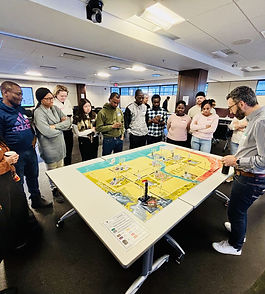
Imagine 20 years of energy transition condensed into an immersive half day simulation. The Newtonian Shift  drops you into the outdated, inefficient, polluting energy system of Newtonia. You may find yourself working for a utility, or a bank. Or maybe you are a First Nations leader, oil and gas producer, or the director of an environmental non-profit. As the population grows and the impacts of climate change become impossible to ignore, the leadership and citizens of Newtonia call on actors across the system, including you, to work together to transform your country’s energy system into one that is sustainable and able to meet the needs of the future. It’s up to you to make it work while dealing with outages, supply disruptions, and shifting government regulations. If this sounds familiar, I’m glad you’ve been paying attention. “You can talk or read about a system, but The Newtonian Shift gives you the visceral experience of being at the centre of change. It’s fun, it’s intense, and provides real insights.”   - Cheryl De Paoli, Executive Director of AREF “I went in with fairly high hopes and they were more than exceeded.” - Imre Szeman, Canada Research Chair in Cultural Studies at the University of Alberta and Co-Director of the Petrocultures Research Group Versions of The Newtonian Shift have been played by energy leaders in Europe, Ontario, and California, but the Energy Futures Lab version is customized to reflect the Alberta experience by including roles for First Nations and the oil and gas sector. The Newtonian Shift plays a central role in EFL’s public engagement strategy. Two sessions were run at the GLOBE conference  in Vancouver earlier this month and with the generous support of the Alberta Real Estate Foundation  (AREF), the game will be played communities across Alberta  over the course of 2016. Cheryl De Paoli, Executive Director of (AREF), and EFL Steering Committee member explains that, “People need to know where their energy comes from, and they need to understand what it actually means to talk about renewables and innovation. We have to get beyond this Us vs. Them argument, and real energy literacy is going to be a big part of getting us there.” _____ But what could the Fellows , with such impressive combined knowledge and experience in energy, possibly get out of playing such a game? About a third of the Fellowship played the game during the January Backcasting Workshop in Edmonton , and here’s a little of what we heard. A platform for Experimentation . We can try things in a game that we cannot just try  in real life. We’ll never design a perfect model of something as complex as Alberta’s energy system, but our ability to run experiments in the real world is extremely limited. Being able to play out interventions over years and across an entire system, even in simulation, can help us to identify promising avenues to pursue in the real world, or understand why an initiative that might seem promising could face unforeseen barriers. Matt Beck , Coordinator of Sustainability and Innovation at Husky Energy Inc, explains that, “You can’t gain the insight you need without using proxies to glean information on how different forces can interact and how dynamics can unfold. The game is a tool to enable experiments like that.” Perspective shifting.  Games let us be someone else . Over the course of a career we can only have so many jobs, and we may not all get the chance to be the CEO  of a major corporation, manage a clean-tech startup, or negotiate on behalf of a First Nations community. The Fellows come from across Alberta’s energy system, bringing their own unique points of view. Some may recently have seen each other as adversaries, but now they’ve been brought together to collaborate. What they are quickly realizing, and what the Newtonian Shift drives home, is that things often look very different from the other side of the table. Gerardo Marquez , Project Manager for the Alberta Electricity System Operator sees real value in the opportunity to experience fresh perspectives: “If you are an electricity provider you may only deal with a few other players, but maybe not others, like policymakers. This game allows you to see the other components that are sometimes hidden from your usual point of view.” Experience of the transition – In a game you don’t just learn something, you live it . The Newtonian Shift gives players the visceral experience of what a transition is like and the type of collaboration that is needed in order to make it happen. The bird’s eye view and time compression of the game world allow players to feel the system and the shift. Interrelations and dynamics are revealed and internalized in a way that can’t be achieved through readings, presentations, discussions or clever facilitation. Imre Szeman , Canada Research Chair in Cultural Studies at the University of Alberta and Co-Director of the Petrocultures Research Group puts it like this:  “There are ways of learning experientially through a game that you just can’t do in other ways. A game like this isn’t about having a laugh. It’s a way of learning that you can’t do otherwise. It cuts to the chase as to what we’re doing, helping us learn and work differently to effect the kind of changes we want.” The first two public game sessions, hosted in partnership with AREF will be held in Calgary and Edmonton  in early April. Whether you’ve been watching the Lab and interested in getting involved, you’re a fellow but didn’t get a chance to try the game in January, or just interested in energy or alternative learning experiences, coming out to one of these sessions will be an excellent opportunity to get a taste of what building the energy system of the future is going to take. #Culture_Shift #The_Newtonian_Shift #2016

Do we have time to play games? Do we have time not to?

Imagine 20 years of energy transition condensed into an immersive half day simulation. The Newtonian Shift drops you into the outdated, inefficient, polluting energy system of Newtonia. You may find yourself working for a utility, or a bank. Or maybe you are a First Nations leader, oil and gas producer, or the director of an environmental non-profit. As the population grows and the impacts of climate change become impossible to ignore, the leadership and citizens of Newtonia call on actors...

On February 16th, Calgary Economic Development and the Pembina Institute co-hosted the  Alberta Community Energy workshop . More than 80 diverse stakeholders participated, including representatives of academia; rural, municipal and provincial government; industry; utilities; economic development organizations; First Nations groups; NGOs and students. Why? Everyone was keen to understand how Albertans could own a piece of the renewable energy pie as the province starts phasing out coal. Community owned energy means that a community (First Nation communities, farming community small town/county and even larger distributed projects in major cities like Calgary, Edmonton or Lethbridge) can have influence on the definition, management and execution of a renewable energy project in either wind, solar, geothermal or biomass. Before brining this workshop together, we wondered: do Albertans even know they can have a personal stake in Alberta’s energy transition? We decided to share this developing story, as well as how any Albertan can participate in community-owned energy, and how they would benefit. Community-owned energy means that a community – such as a First Nations community, a small town, or even a major city like Calgary, Edmonton or Lethbridge – can have influence on defining, managing and executing a renewable energy project in either wind, solar, geothermal or biomass. These projects are usually created for the purpose of generating electricity. So why would a community team want to take this on? Community-owned distributed renewable generation brings considerable benefits to Alberta families, businesses, communities and the economy. It can turn energy infrastructure — otherwise considered a liability — into an asset with financial and social benefit returns. Families can look to renewable energy to complement their household income and strengthen their balance sheets by investing in an energy co-op, a community solar garden or buying shares in a community economic development investment fund. Communities retain economic benefits as well. Initial investment can return money to the community for re-investment. Renewable energy projects build capacity for further community economic development by retaining capital, training local labour and inspiring entrepreneurship. And because citizens have a direct stake in their energy production they are more likely to gain energy literacy. On the macro-economic level, community ownership of energy systems can foster long-term social license for renewable energy. Community energy can be an important part of a comprehensive effort to diversify employment opportunities by developing the trades and skills necessary to plan, install and maintain renewable energy systems. Obviously not all communities have the know-how to develop their own community energy project but there are plenty of ways these business ventures can be structured. Communities can choose between a for-profit and non-profit model. Project leadership can come from a variety of places, including community members, associations, entrepreneurs, local businesses, school boards, municipalities or post-secondary institutions. And like any successful project team, a diverse set of skillsets are required for business planning, such as financial modeling; legal expertise for writing up and negotiating contracts; and marketing to acquire funding, grow membership and encourage community involvement. Intrigued? There are plenty of resources to check out to feed your curiosity and learn more. A couple of active Alberta projects Lubicon Solar  — a 20 kW solar energy project that provides clean, affordable power to a small First Nations community. This project not only offers affordable electricity, but an opportunity to train and involve community members in energy literacy education. Green Acres  — the largest solar project in Alberta, 2 MW of installed solar energy capacity with a local Hutterite community. Town of Devon and Vulcan are both involved in solar projects that are initiated by the municipal (town) governments, but involve a substantial amount of community member consultation and crowd-funding for certain elements of the project. Town of Banff offers a Feed-in Tariff program, and is researching ways to involve a larger portion of the town’s population in a community energy project format Outside of Alberta Samso “Energy” Island  — An island with a local population of 4,200 who have pooled together their resources to finance an energy transition with an off-shore wind farm, biomass and solar installations. The island has since established it’s own “Energy Academy” for capacity building, training and show-casing the island’s achievements to the international community. We encourage all Albertans to understand what choices they have to take an active role in their energy future. Community-owned renewable energy projects are one way to get involved, learn about energy production and alongside your neighbours. A group of Calgarians have just launched a crowdfunding campaign for the Alberta Solar Co-op  – here’s your chance to find out more about community energy ownership from people just like you. #Culture_Shift #The_Newtonian_Shift #2016

Megan Zimmerman & Barend Dronkers: What is Community Energy?

On February 16th, Calgary Economic Development and the Pembina Institute co-hosted the  Alberta Community Energy workshop . More than 80 diverse stakeholders participated, including representatives of academia; rural, municipal and provincial government; industry; utilities; economic development organizations; First Nations groups; NGOs and students. Why? Everyone was keen to understand how Albertans could own a piece of the renewable energy pie as the province starts phasing out coal....

Is oil a dirty word? Spoiler, no. Energy Futures Lab Director Chad Park speaks to GLOBE 2016 attendees at the Walrus Talks Energy  event.  Chad’s talk challenges the simplistic approach of ‘with us or against us’ debates, and calls for new dialogue to enable the transition to a carbon competitive economy. #Fellowship #Culture_Shift #2016 #EFL_Platform

Is Oil a Dirty Word? Walrus Talks Energy: GLOBE 2016

Is oil a dirty word? Spoiler, no. Energy Futures Lab Director Chad Park speaks to GLOBE 2016 attendees at the Walrus Talks Energy event.  Chad’s talk challenges the simplistic approach of ‘with us or against us’ debates, and calls for new dialogue to enable the transition to a carbon competitive economy. #Fellowship #Culture_Shift #2016 #EFL_Platform

The January EFL workshop was the first chance for the EFL Fellows to dip their toes into backcasting  waters. Backcasting is central to the Lab because it establishes the creative tension between our desired future and the current reality that will drive innovation in the Lab. Backcasting from the science-based principles helps define the system conditions for a sustainable economy and offers us a way to find that common ground. Working toward an energy system that aligns with these principles will ensure that we are shooting for one that is truly fit for the future. - Chad Park Outcomes from the Backcasting Exercise The Fellows did hard and good work together in far too compressed amount of time. After our first iteration we jointly assessed each Fellow’s satisfaction with the draft, i.e. how well did it articulate the transition that we’re seeking to enable together? We found our initial output lacking in a few key ways: First our desired future did not feel bold or ambitious enough. There was a feeling that it could set a path for incremental improvement rather than inspiring our commitment to transformative, breakthrough ideas. Our attempts to rapidly synthesize a range of rich conversations and insights resulted in statements that felt watered down. As one Fellow noted – they could have been generated by any group, rather than the vast collective experience in the room. This was particularly true for the desired future. We didn’t capture enough of the current energy system strengths that we can leverage for the transition. I also noted that the backcasting exercise may have left some of us holding early narratives just as tightly as before. Did Fellows who may believe that fossil fuels have no future have their view challenged in any way? Conversely, did the Fellows who may believe that our current economic dependence on fossil fuels is so pronounced that any talk of an alternative future is unrealistic have their view challenged? We’re all here together because we’ve expressed a belief that there can and must be some common ground among such diverse views and that working together is not only possible, but necessary if Alberta is to chart a new leadership course in a carbon competitive global economy. Backcasting from the science-based principles helps define the system conditions for a sustainable economy and offers us a way to find that common ground. Working toward an energy system that aligns with these principles will ensure that we are shooting for one that is truly fit for the future. It will also help us step beyond debates about fossil fuels to imagine new potential roles for hydrocarbons in a low-carbon economy and in the period of transition to get there. Most importantly, backcasting from principles will help us identify that there are multiple pathways to get to that future. Players from all across the system can be engaged in parallel and aligned (but distinct) innovation efforts. This is the great potential of the Energy Futures Lab as a forum for innovation. This was clearly a first step in a longer-term process for the group to get more shared about what the future requires of us. Lessons Learned Nevertheless, in hindsight it’s easy to see what could have been better about the design of the January backcasting session to help this amazing group get a little further with its first iteration. The first and obvious thing to adjust was that we needed more time. Beyond that, in my view there is one very big opportunity that could have been arranged differently: switching the order of the “ desired future ” and “ assessing current reality ” aspects of the backcasting exercise. Ironically, Fellow, Dick Eberson from the City of Calgary, raised this at the outset of the exercise. In my response I stated that when backcasting from sustainability principles it doesn’t matter which side of the gap you start with, since you end up iterating both sides a number of times. And that there are some benefits to doing a rigorous analysis of the current system through the lens of sustainability principles first. In my experience, helping many different groups with backcasting, this is often true. But in this case, starting with the “desired future” and imagining the future of Alberta’s energy system through the lens of sustainability principles would have created some space to deepen insights about the implications of sustainability science for Alberta’s energy system. We would have gotten to some of the meatier, more challenging topics more quickly. – like the role of hydrocarbons in a sustainable future. It would have created a bit more space for debate and dialogue to allow the fellows to challenge some of their respective assumptions and paradigms. It also would have allowed us to delve a bit deeper into truly transformative potential visions like the one EFL Advisory Council member Suzanne West outlined in an interview posted here . Finally, doing it this way would have allowed us to spend relatively more time on the future and relatively less time assessing the current reality. It also would have been a more energizing and uplifting close to the first day, instead of a dreary and sobering look at the challenges we face. We could have then spent time during the current reality assessment to reflect on what is working about the current system – i.e. what strengths can we build on? This adjustment would have clearly positioned a presentation by Alberta Energy’s Chief Energy Economist Mathew Foss, which relied heavily on forecasting, as part of the current reality that we need to contend with as we seek to transition to our desired future. Next Steps Going forward, we’ll have a stronger focus and tighter process for building a shared understanding and expression of “the energy system that the future requires of us.” A group of six EFL Fellows volunteered to work together with backcasting experts from the EFL design team to articulate the next iteration of the “transition” gap. We’ll likely also organize sessions for all the Fellows in multiple locations between now and May to work through drafts together and to dive deeper into some of the more challenging and contentious points. The platform of the EFL also offers us some excellent opportunities to consult beyond the Fellowship to gather input, for example by consulting with the EFL Steering Committee and Advisory council. As we do this, we will support the Fellows in using science-based principles as design constraints for the sustainable future. We’ll push ourselves to get beyond broad generalities about a desired future state to get to a level of specificity that both demonstrates full alignment with sustainability principles and can also clearly drive innovation efforts. We’ve got all the raw material we need, and there could be no more impressive, engaged, constructive group of people to work together on this vitally important task than the EFL Fellows. Getting it roughly right could make the difference between an Energy Futures Lab that reaches its full transformative potential and one that generates some interesting and modest improvements on the status quo. In other words, we have some important unfinished business! #Culture_Shift #Fellowship #2016 #EFL_Platform #EFL_Vision #Backcasting

Chad Park: Our Unfinished Backcasting Business

The January EFL workshop was the first chance for the EFL Fellows to dip their toes into backcasting waters. Backcasting is central to the Lab because it establishes the creative tension between our desired future and the current reality that will drive innovation in the Lab. Backcasting from the science-based principles helps define the system conditions for a sustainable economy and offers us a way to find that common ground. Working toward an energy system that aligns with these...

The Energy Futures Lab (EFL) is proud to announce the Government of Alberta as a convening partner. Recognizing the need for innovative ideas and new partnerships in the transition to a carbon competitive and more diversified economy, the Government of Alberta is officially joining the Lab to support and enhance its vast potential. The other EFL convening organizations – The Natural Step Canada, Suncor Energy Foundation, The Banff Centre, and Pembina Institute – are thrilled to work with the Government of Alberta and have the province’s support at such a pivotal time in shaping our energy future. I’m pleased the Government of Alberta is joining Suncor, The Natural Step, the Banff Centre, and Pembina Institute in supporting the Energy Futures Lab - Hon. Shannon Phillips, Minister of Environment and Parks At a late-January EFL reception in Edmonton, Environment and Parks Minister Shannon Phillips had these thoughts to share with Energy Futures Lab Fellows and partners as she announced the Alberta government’s support: “The Energy Futures Lab can serve as a forum to help foster the innovations necessary to actualize and accelerate the transition to a low carbon future. I’m pleased the Government of Alberta is joining Suncor, The Natural Step, the Banff Centre, and Pembina Institute in supporting the Energy Futures Lab. It’s a fantastic Alberta-driven initiative backed by a diverse group of innovators and influencers. This is about our economic future: diversification, innovation and jobs. With collaborative support like this for our entrepreneurs and innovators, I believe that we can see new and effective innovations and technologies. Ideas and technologies that could unlock the next deposit, reduce the impact of tailings, create energy from waste or accomplish something we haven’t even thought of yet. These technologies will help create new jobs and help build our knowledge economy. Our next big energy export might be a technology that helps the world reduce carbon emissions from energy production. We understand there is a tremendous of vulnerability for Albertans right now. We can’t control the price of oil, but what we can do is control how we respond to it. We can also control how we treat each other through crisis. So we have chosen to be collaborative and solutions focused. We are not interested in throwing tantrums. We are interested in substantive, productive engagement on this serious project of nation building. We have chosen, as a government to invest in diversifying our economy. We have chosen, as a government to find new markets for our products. We have chosen as a government to look for ways that we can add value and become carbon competitive and build on our current advantages. We have chosen to work together. That, we believe, is the actual Alberta way. And that’s why we’re proud to support the Energy Futures Lab, whose chorus of diverse voices reflects a kind of well-versed input we want and need in moving to a carbon competitive economy. I’d like to wrap things up with some thoughts specifically for the Fellows. You’ve earned a tremendous opportunity by being part of the Energy Futures Lab Fellowship and I encourage you to make the most of it. Future generations in our province may just look back at this time and initiatives like the Energy Futures Lab as the moment when real leadership for addressing climate change began to blossom. As you dive into the innovation process and the interaction with all these diverse stakeholders, remember to ask yourselves difficult questions. How can we build public engagement support for a low carbon future? How can we work together to help change the public conversation particularly at a time of such difficulty for so many Albertans? How will we – not can we – diversify the economy, add value to our resources and create good jobs for Albertans? And can we find pathways to low emissions energy production or even a non-combustion future for our hydrocarbons. I’m very interested to see where you can go from here.” I’m pleased the Government of Alberta is joining Suncor, The Natural Step, the Banff Centre, and Pembina Institute in supporting the Energy Futures Lab. #EFL_Platform #2016

Announcing Government of Alberta as Convening Partner

The Energy Futures Lab (EFL) is proud to announce the Government of Alberta as a convening partner. Recognizing the need for innovative ideas and new partnerships in the transition to a carbon competitive and more diversified economy, the Government of Alberta is officially joining the Lab to support and enhance its vast potential. The other EFL convening organizations – The Natural Step Canada, Suncor Energy Foundation, The Banff Centre, and Pembina Institute – are thrilled to work with the...

What is the energy system that the future requires of us? This query underpins the convening question for the Energy Futures Lab and is a key part of the inquiry of the EFL Fellows as they backcast together in the Lab. Effective backcasting requires a bold and compelling vision to drive transformative innovation and overcome the tendency for only incremental improvement efforts. Who better to help the EFL think about a bold and compelling vision for our energy system than Imaginea Energy President and CEO (and EFL Advisory Council member) Suzanne West? Chad Park sat down with Suzanne while she attended the first EFL workshop in Banff. Our vision as an industry is that we are producing hydrocarbons to do good work in the world. To build things, to build renewable things, rather than to burn them and create pollution and emissions. - Suzanne West Chad Park : I am pleased to have the opportunity to speak with Suzanne West, President and CEO of Imaginea Energy Corporation. Suzanne West : Thank you for having me. CP : The first thing we want to talk about is the big question that we are asking of the Fellows and of Alberta. What do you think our future energy system will look like? SW : Imagining our future energy system requires for us to all to generate a new vision of what we want to be. We can generate a vision that is inspiring and motivating and digs into the best parts of us as humans, as business leaders, as community participants. We need to create a vision that we can see and can energize. Our behaviors follow that, our innovations follow that, our desire to get rid of our bad habits follows all of this naturally and organically. We need to have people excited about a vision of Alberta, a vision of us as leaders in this energy field. Energy is going to define our future. We have been so blessed with the energy resources that we have in this province. Why wouldn’t we want to be leaders in that? CP : You have built a company around a certain vision of the future and a certain vision of the energy system. Can you tell us a little more about that? About the vision that’s driving your work? SW : Imaginea stands for imagine a new way of doing business. We are trying to create new paradigm shifts for people that are positive. Our main shift is to create an understanding and desire for an “and” mindset. We now have limited solution sets. You can either be a tree-hugger or a greedy capitalist in the energy sector. That’s just not been helpful. Imaginea is all about trying to show the magic of “and”. To show the increase and the depth and breadth of the opportunity base that we have in the permutations and combinations of solutions to complex problems. That “and” is the way forward. It is an opportunist way of looking at it rather than under the banner of “should”. That is a good narrative too, that we should, because we definitely should. But to me, the more powerful narrative is “and.” It is the opportunity of making business better, of making our environmental footprint better, of providing greater meaning and purpose for people. That will just afford us a new future that is just going to be so much better. CP : Can you tell us about a few of those examples where you are already starting to see, or to build, glimpses of the future? SW : One of Imaginea’s really high dreams as we look further into the future is to help people understand that fossil fuels aren’t all bad. The problem with fossil fuels isn’t that we produce them. The problem is that we burn them. Fossil fuels and combustion engine vehicles are very inefficient uses of the very precious energy we have. But, hydrocarbons, hydrogen and carbon, are two incredibly important molecules for our future. Hydrocarbons will be very important for building useful things for society. So, one of our high dreams at Imaginea is to transform this idea of not just how we are producing hydrocarbons, but why we are producing them. Our vision as an industry is that we are producing hydrocarbons to do good work in the world. To build things, to build renewable things, rather than to burn them and create pollution and emissions. Wouldn’t it be super cool if we had a province and a country that produced hydrocarbons without emissions, without pollution, without the use of fresh water? To build and use things in really helpful ways. We could potentially be the hydrocarbon source of choice, and we could be viewed as, “Wow, they’re the ones that are actually leading the way in how we need to do this.” —– Stay tuned for Part 2 of Chad Park’s interview with Suzanne West. #Culture_Shift #EFL_Platform #2016

Imagining a New Energy Future – with Imaginea Energy CEO Suzanne West

What is the energy system that the future requires of us? This query underpins the convening question for the Energy Futures Lab and is a key part of the inquiry of the EFL Fellows as they backcast together in the Lab. Effective backcasting requires a bold and compelling vision to drive transformative innovation and overcome the tendency for only incremental improvement efforts. Who better to help the EFL think about a bold and compelling vision for our energy system than Imaginea Energy...

Sustainability expert, Pong Leung introduces backcasting, a key tool for the Energy Futures Lab Backcasting gives you a chance to look through the front windshield seeing clearly the road ahead, as well as the tools to imagine the best possible destination where you could arrive and thrive. It is about imagining a very clear future not constrained by the limits of your past experience. This creates a sense of freedom and unleashes new ideas, and new possibilities. – Pong Leung We are all familiar with the idea of starting with the end in mind. In fact, it is likely that you have seen the benefits of applying it individually or with your family, for example when exploring your career path or planning a family vacation. You likely started thinking about what a successful career or vacation would mean and then used that as a guide to make decisions in the near-term to help you get there. This is the essence of “backcasting”, a methodology for planning in complexity. It is a play on the word “forecasting”. In forecasting you look at past performance and trends and project them out into the future. For example, a business might make a sales forecast by looking at consumer trends to set at target. There is nothing inherently wrong with forecasting, however when applied in isolation it is of limited value. It would would be like basing where you live only on where you have lived previously (“I lived in Vancouver, then Calgary, so I must move east next!”) or driving a car by only looking in the rearview mirror. Of course we don’t do this. Backcasting gives you a chance to look through the front windshield seeing clearly the road ahead, as well as the tools to imagine the best possible destination where you could arrive and thrive. It is about imagining a very clear future not constrained by the limits of your past experience. This creates a sense of freedom and unleashes new ideas, and new possibilities. And it isn’t a flight of fancy. There is a rigour that once you identify the future state of possibilities then you have the tools to develop from the desired future the reasoned, clear path back to your current state. In so doing creating the critical path that projecting the past alone couldn’t inspire. Given the potential, backcasting should also play an important role in planning in organizations, communities and sectors, in particular when there is a strong sense that the current direction that they are headed is not taking them where they want or need to be in the future. Rather than simply projecting out the current direction and accepting it as their future path, backcasting invites people to come together to articulate a shared intention about a different future they want to create  and then find new ways of working together  to achieve it. The Natural Step has decades of experience helping groups – businesses, communities and sectors – create and realize bold and resilient futures via backcasting. Our approach consists of four interrelated and self-reinforcing concepts commonly referred to as the ABCD. Awareness.  Building awareness of the relationship between the organization, community or sector and the society and environment within which it operates. In particular, this involves clarifying the future risks in the way we currently operate, and the business future opportunities in finding new ways of doing things. Baseline <—> Compelling Vision . Creating a compelling vision of where we want to be and taking an honest look at where we are now establishes a shared creative tension that motivates us to act. Down to Action . Brainstorming potential actions and prioritizing them by evaluating how they help us move towards our compelling vision, how they can act as a platform for future steps towards our vision, and how they generate sufficient return on investment to seed future steps. As you can imagine, “ABCD” is not as simple nor as linear as A-B-C-D, rather it is an ongoing process of planning, acting, evaluating and learning. The more we think about the future the more questions it will raise about today; the more we learn about today will expand possibilities for the future; the more we act and learn from actions the clearer the way forward will become, and so on. Recently, the Fellows of the Energy Futures Lab backcasted together for the first time. We took a look at where we are today, explored the energy system that the future requires of us, and identified the best opportunities for collaboration to enable the transition. Although the benefits of backcasting are significant, we found ourselves faced with a number of questions to unlock its full potential, including: How do we describe a future that feels bold and ambitious enough to establish a real creative tension that will lead to breakthrough ideas? How do we bring together the ideas, aspirations and thoughts of 40 people into clear and concise statements without them feeling watered down, generic and confusing in the limited time together that we have? How do we fully capture both the challenges and benefits of our current energy system so that we start with a full picture of where we are? We still have a lot of work to do, and know that we need to get it right to be able to realize the full potential of the Energy Futures Lab. We are keen to work together to explore these questions and others, and are looking forward to next steps. Look out for an upcoming blog from Chad Park sharing further lessons from our experience in the EFL and some ideas for moving forward at www.energyfutureslab.com #Culture_Shift #Fellowship #2016 #EFL_Platform #EFL_Vision #Backcasting

Backcasting: Starting with the End in Mind

Sustainability expert, Pong Leung introduces backcasting, a key tool for the Energy Futures Lab Backcasting gives you a chance to look through the front windshield seeing clearly the road ahead, as well as the tools to imagine the best possible destination where you could arrive and thrive. It is about imagining a very clear future not constrained by the limits of your past experience. This creates a sense of freedom and unleashes new ideas, and new possibilities. – Pong Leung We are all...

Reflections from our Energy Futures Lab Fellows Distorted market prices have occurred due to past governments picking winners overs losers versus ensuring an even playing field – a fair competition.” – Alison Thompson What does the future of Alberta’s energy system look like to Alison Thompson, Managing Director of the Canadian Geothermal Energy Association (CanGEA) and Energy Futures Lab (EFL) Fellow? “Renewable, when possible, and not only measured by today’s market prices, which substantially subsidize fossil fuels with ‘hidden’ health and environmental costs, tax advantages, research support and dedicated government programs.” Alison is passionate about the importance of leveling the playing field when it comes to energy production and explains that, “Distorted market prices have occurred due to past governments picking winners overs losers versus ensuring an even playing field – a fair competition.” The Energy Futures Lab (EFL), convened by The Natural Step Canada in collaboration with Suncor Energy Foundation, the Pembina Institute, and the Banff Centre introduces a new approach to energy in the province. It brings together unlikely bedfellows from across Alberta’s energy system to trade ideas and innovate towards the energy system that the future requires. Such an approach is desperately needed explains Alison: “We’re treating ourselves, I think, very disrespectfully as a province. We’re treating ourselves like a developing nation where people come in and pillage, extract, and then send the products away..It is time to move towards a knowledge economy.” Having built her career over the past 20 years on energy in Alberta, and worked on both sides of the renewable/non-renewable energy spectrum, Alison’s selection to the EFL Fellowship was an easy decision. “I started out in industry not as an engineer, I was a relief operator, so I literally was the person driving around the oil and gas fields and checking gauges, batteries and operating wells, and gas plants. From there, I finished my engineering degree and worked for Shell, Suncor, Nexen, and a coal utility in the States.” Since leaving Nexen, Alison’s work has focused on geothermal energy. Geothermal, while not as common in Canada, is in widespread use across the world and famously provides approximately 65% of primary energy in Iceland. Alison wants people to understand the potential appetite for change that exists in the province. “There are many people like me who worked in oil. We have not turned our back on oil. That industry is the goldmine of talent. The word ‘energy’ can be expanded. Every company wants to make money and they don’t really care if it’s from oil. That happens to be the profitable commodity of the past but it is no longer the profitable commodity. With the proper government policies in place, if another commodity, like renewable energy, is in the market, then I think they would be very happy to use that energy instead as their vehicle for profit.” On Alberta’s ability to capitalize on the energy opportunities of the future, and the EFL’s potential to catalyze change, Alison is extremely optimistic. “This province is full of engineers, scientists, geoscientists, and we’re being blocked from being as innovative as we can. It’s not just about energy. It’s about personal satisfaction and expression in the job. We can do better. Other countries are already doing better… It’s our opportunity to step ahead. We need some people to lead the way. This lab is a wonderful incarnation of a group of people coming together to lead the way.” #Culture_Shift #Geothermal_Energy #Clean_Technologies #Fellowship #EFL_Platform #2016

Alison Thompson: This is Alberta’s Opportunity to do Better

Reflections from our Energy Futures Lab Fellows Distorted market prices have occurred due to past governments picking winners overs losers versus ensuring an even playing field – a fair competition.” – Alison Thompson What does the future of Alberta’s energy system look like to Alison Thompson, Managing Director of the Canadian Geothermal Energy Association (CanGEA) and Energy Futures Lab (EFL) Fellow? “Renewable, when possible, and not only measured by today’s market prices, which...

Reflections from our Energy Futures Lab Fellows “The Albertan Oil Sands, and the province’s economic dependence on them needs to be an important focus for the province as it shifts to a modern energy future that is economically lucrative and sustainable.” – Aproov Sinha What does the future of Alberta’s energy system look like to Apoorv Sinha, founder of Carbon Upcycling Technologies , Research Manager of zEroCor Tubulars Inc , and Energy Futures Lab Fellow? “In the future, it is important to create a system with distributed and localized energy sources where under-utilized resources like stranded natural gas and local ecosystems can be better utilized for local energy generation. Central power generation facilities like conventional nuclear and coal-powered plants will need to be transformed to more modular energy sources, fuelled primarily by renewable energy sources and natural gas that can provide local power distribution. Initiatives like compressed air energy storage in caverns, small-scale solar modules will need to create localized power generation hubs, supplemented by technologies like Lithium-Sulphur batteries for energy storage at high densities.” Apoorv is ready to bring his entrepreneurial, system-driven perspective on energy infrastructure to the Energy Futures Lab (EFL), as one of 40 Fellows selected to represent government, the energy sector, First Nations groups, and NGOs. The Fellows have been brought together by The Natural Step Canada in collaboration with The Suncor Foundation, The Pembina Institute, and The Banff Centre to initiate a shift in Alberta towards an energy system characterized by sustainability, resilience, and innovation. Dr. Carol-Ann Brown, Director of Technology Services at The Delphi Group, and Operations Director for the Low Carbon Innovation Alliance notes that “Apoorv’s start up, Carbon Upcycling Technologies, is clear proof of his understanding that modern society requires more than tinkering at the edges, and that a perspective of the energy system, as a whole, is necessary. The utilization and transformation of carbon into a useful product replaces the current paradigm and practice of treating carbon as garbage and the atmosphere and oceans as society’s disposal system.” Besides the impressive technical expertise and business-minded approach, Apoorv brings to the lab an understanding that “change can be driven through management but needs to be facilitated through changes at a tactical, grass-root level to be sustainable, effective and create an overall positive impact.” In the face of the oil price shock, and in the wake of a historic political shift, Albertans are demonstrating that they are ready to shape their own energy narrative and shift their province in a direction that is fit for the future. As a Fellow, Apoorv will collaborate, innovate, and guide action towards an energy system that all Albertans can take pride in. #Culture_Shift #Fellowship #CCUS #Batteries #Advanced_Minerals #Future_Economy #2016 #EFL_Platform

Apoorv Sinha: What Does the Future of the Alberta Energy System Look Like?

Reflections from our Energy Futures Lab Fellows “The Albertan Oil Sands, and the province’s economic dependence on them needs to be an important focus for the province as it shifts to a modern energy future that is economically lucrative and sustainable.” – Aproov Sinha What does the future of Alberta’s energy system look like to Apoorv Sinha, founder of Carbon Upcycling Technologies , Research Manager of zEroCor Tubulars Inc , and Energy Futures Lab Fellow? “In the future, it is important to...

The article “Innovation is key to new economy,” originally appeared in the Edmonton Journal  on Tuesday January 26, 2016. Let’s step beyond the polarized and polarizing narratives that in recent years have kept us stuck in camps and inhibited our culture of innovation. This is not about good guys and bad guys, dirty versus clean industries, people who support oil and gas and people who do not. Building a resilient economy for a low-carbon future will require the resources and capabilities of Albertans from all sectors of society. In tough times, it is tempting to look back instead of looking forward. Hold on tight; wait for things to return to normal. For Alberta in early 2016, we face job losses, budget cuts and credit rating drops — emphasizing the extent to which our economic vitality depends on oil and gas. It is tempting to long for the past and hope that a rebound in the price of oil is imminent so the good times can return. Another temptation is to want to pick new sectors and technologies that might help us diversify our economy — find some new baskets for our eggs. Were it only so simple. The most innovative companies in the world know that long-term competitive success in a dynamic global economy lies less in focusing on any specific technology and more in building a culture of innovation. Google, for example, relentlessly seeks to foster a culture that breeds new ideas and breakthroughs. It starts with how they hire — targeting people who are open to new ideas, highly adept at adapting to change, and interested and passionate about a wide range of things. They then support these people by ensuring they have time to pursue their creative ideas, reducing hierarchy and other institutional barriers, and fostering a highly collaborative work environment that constantly brings new people and ideas into contact with one another. How can Alberta renew our culture of innovation to help us leverage our strengths and assets for building the economy that the future requires of us? First, let’s identify the big challenges and accept that we don’t know the answers. For example, we don’t yet know how to dramatically lower the carbon intensity of oilsands production or how to transform carbon dioxide into carbon-based materials instead of releasing it to the atmosphere. But we know we’ll need to do so if our vast hydrocarbon resources are going to continue to be a source of prosperity in the low-carbon global economy that the world wants to build. Not quite having the answers yet to grand challenges like these creates an enormous opening for innovation. Next, let’s create the ecosystem that breeds transformative new ideas. This means more than supporting research and development and investing in new technology ventures. Let’s also create opportunities for the scores of innovators and influencers in Alberta to interact with one another in unpredictable ways, where the outcomes are not pre-determined. Let’s make sure this effort goes out of its way to bring “strange bedfellows” together — technology innovators with artists, environmental activists with community leaders, oil and gas executives with students, clean technology pioneers with First Nations leaders. Furthermore, let’s step beyond the polarized and polarizing narratives that in recent years have kept us stuck in camps and inhibited our culture of innovation. This is not about good guys and bad guys, dirty versus clean industries, people who support oil and gas and people who do not. Building a resilient economy for a low-carbon future will require the resources and capabilities of Albertans from all sectors of society. The good news is that many Albertans from a wide range of backgrounds are more than ready for this challenge and are already rolling up their sleeves. Audrey Mascarenhas, for example, leads an oilfields service company, Questor Technology, that is exporting technology and know-how to turn waste emissions into energy and dramatically improve efficiency and air quality. Apoorv Sinha is an entrepreneur and chemical engineer whose company, Carbon Upcycling, is testing and developing technology to turn carbon dioxide into carbon-based nano-fibres. Meera Nathwani-Crowe is driving environmental performance improvement efforts at Shell Canada, seeking and implementing technology solutions, such as Shell’s new Quest carbon capture and storage project in Fort Saskatchewan. Jennifer Martin  leads the Calgary science centre, Telus Spark, and is helping realize a vision to engage the Alberta public in the role and power of science in innovation and energy transition. Their stories and achievements don’t tend to dominate headlines, but these individuals and many like them are going to be the driving force for our future prosperity. They are a part of a growing wave of people across Alberta who want to be a part of building the economy that the future requires. They and 36 other people from a wide range of backgrounds called the “ Energy Futures Lab Fellows ” will gather in Edmonton January 25th to 27 to explore opportunities to collaborate. Environment and Parks Minister Shannon Phillips will address the group Tuesday evening. Their message to her and to all Albertans: we can do this. Source: Edmonton Journal #Culture_Shift #Clean_Technologies #Fellowship #2016 #EFL_Platform

Op-Ed: Innovation is Key to New Economy

The article “Innovation is key to new economy,” originally appeared in the Edmonton Journal on Tuesday January 26, 2016. Let’s step beyond the polarized and polarizing narratives that in recent years have kept us stuck in camps and inhibited our culture of innovation. This is not about good guys and bad guys, dirty versus clean industries, people who support oil and gas and people who do not. Building a resilient economy for a low-carbon future will require the resources and capabilities of...

I’m pretty sure that “failing forward” has officially reached buzzword status, and if you’re like me you might be a little tired of hearing about the importance of failing. That being said, when what we’re trying to do is change massive, complex systems like how energy works in Alberta, it’s not very likely that perfect solutions – whether they be a products, services, or business models – are going to spring fully formed from our heads on the first try. So what if we could save ourselves some of the heartache and lost opportunity cost of failure by getting as much of that valuable learning done as possible before launch? 3 Reasons to prototype It’s cheap – Even if your prototype ends up being very close to the final model you arrive at, or a complete throwaway, it’s not as if you wasted much time, effort, or money. Prototyping allows us to try things with minimal risk. It’s going to save you time and money in the long run – We want to do our best to find out what works and what doesn’t before we go too far down any given path. Nobody knows everything – Exposing your model to testing and criticism allows you cover your bases and develop your model as much as possible prior to launch. How to select an idea for testing The following criteria are proposed by Theory U author Otto Scharmer for the selection of prototypes (Step 3): Relevance: Does it matter to the stakeholders involved? Select a problem or an opportunity that is relevant individually (for the persons involved). Revolution. Could it change the game? Rapid. Can you do it quickly (and avoid paralysis by analysis)? Rough. Can you do it on a small scale, on the lowest possible resolution that allows for meaningful experimentation? Right. Can you see the whole in the microcosm that you focus on? Relational. Does it leverage the strengths, competencies and possibilities of the team or network involved? Replicable. Can you scale it out (replicate), up (supportive systems), and/or deep (e.g. attitudes, culture)? Prototyping and Labs No new tech product or piece of software would get to market without having undergone multiple rounds of redesign to eliminate bugs and optimize user experience, so why should a change initiative? “ A prototype is in fact an experiment, the purpose of which is to determine what works and doesn’t work .” Langdon Morris of InnovationLabs LLC Prototyping is about testing – rapidly and cheaply – an idea before making big investments, with success defined as the exploration of challenges and possible solutions. Ideally, prototyping will lead to an idea that deserves further testing, a full-fledged pilot or even a larger “roll out” across the system we’re hoping to change. The only way to fail is to not learn from the experience or not carry forward what has been learned into the next iteration of your solution. Building and Testing Models While methods vary, a typical change/innovation lab prototyping process may look something like the following: Design Brief – The prototype team drafts a description of the challenge, the types of outcomes they hope to see, and the key features of the response and/or constraints within which they operate. Observation and Research – The team spends time exploring the challenge they are trying to address and the systems in which these challenges are embedded. This may be accomplished in any number of ways including research, expert interviews, site visits, etc. Ideation and Selection – The team generates ideas that may be worth testing and selects those that will be tested as prototypes. Remember that not all ideas deserve to be prototyped. See How to select an idea for testing. Description of prototype – The team articulates a tangible and testable description of the model and prepares for implementation. Prepare evaluation plan – The team clearly outlines how it plans to test and evaluate the model during implementation. Implement/test and evaluate – Methods of testing and evaluation vary but may include; product testing with key stakeholders, focus grouping, or even Dragon’s Den-style examination by a panel of ‘investors’. Decide next steps: According to the results of evaluation, the prototype team may choose to discard the model, apply revisions and continue testing, graduate to a pilot, or go to scale. Prototyping for a Sustainability Transition Lab This month the Energy Futures Lab Fellows  will convene for the second time. During their first gathering in November, they identified 8 ideas that they wanted to prototype and formed groups to begin the process. At next week’s session, they will take stock of their learnings and identify new ideas for prototyping. With what is facing Alberta’s energy system today, it’s tempting to want to launch initiatives that seem like no-brainers as fast as possible. If the Fellows share any unifying characteristic it is that they are all extremely action-oriented doers. The facilitators of this session may face a bit of a challenge in harnessing the energy of such a group for the testing and evaluation process. But the truth is that just about any idea, especially those being launched into extremely complex systems, can be improved and refined through thoughtful and robust (but at the same time quick and inexpensive) testing and revision. I can’t wait to see what comes out on the other end. #Culture_Shift #Fellowship #2016 #EFL_Platform

Rapid testing, Small investment: Prototyping in the Energy Futures Lab

I’m pretty sure that “failing forward” has officially reached buzzword status, and if you’re like me you might be a little tired of hearing about the importance of failing. That being said, when what we’re trying to do is change massive, complex systems like how energy works in Alberta, it’s not very likely that perfect solutions – whether they be a products, services, or business models – are going to spring fully formed from our heads on the first try. So what if we could save ourselves...

Last time we talked about how data visualizations can be used to get a better understanding of the Alberta Energy system. Now we are happy to announce the launch of our Energy System Database ! As we have mentioned before, there is no shortage of data on the energy system but how can we get a sense of how all the pieces fit together? Well the Energy System Database is a great place to start. Database Categories We have organized the data sets in number of ways to make it easier for you to find what you are looking for. The first way we have organized the data is by energy type. You can see data on: Primary energy – data by source such as oil & gas, coal, or renewables End-Use energy – how is that energy being used? By consumers? Industry? For transportation or export? Impacts of the energy sector – data on Greenhouse Gas (GHG) emissions, environmental and economic impacts of energy in Alberta The second organization type is by data source type. Here you can look at data from: Government – both Provincial and Federal Industry – including industry associations Non-Governmental organizations And finally, we have categorized the data sets by visualization type: Raw data – data tables that don’t have any visualization applied Reports – data visuals that have been pre-built by the report designer Interactive – visualizations that let you change variables and play with assumptions In addition, we have tagged each item with a link to the visualization, the source data (if available), the format of the data, years the data is available and provided a screenshot preview of the data. How the Database Works Why did we make these choices for organizing all of these data sets? For three key reasons: People mean many things when they say “energy system”. Some are talking about electricity production, some are talking about oil & gas, some are talking about energy for export, some about energy efficiency. By collecting data sets on ALL of these views of the energy system, you get a sense of the overall picture of energy in Alberta. As mentioned before, data is always telling a story. And who tells that story will inevitably influence the kind of story being told. Looking at energy data from governments, industry and NGOs lets us compare and contrast and start to understand the stories behind the data. As much as we can give you our analysis of the data, you may want to decide for yourself. We have tried to give you links to as much of the raw data as is available so you can download and see for yourself. The  Guardian  in the UK (one of the world leaders in online data visualization) does this for almost all of their infographics and reports. Next time, we’ll dig into a few of these visualizations to look behind the scenes at how the data was put together, look at the stories behind the data and what the visualizations can (and can’t!) tell us. Contribute to the Database Have you found a site that does an amazing job of visualizing this data? Know of a data set we should include? Please send a note to info@energyfutureslab.com  and let us know. We’ll get it up on our site as soon as we can. #Culture_Shift #2016 #EFL_Platform

Introducing the Energy System Database!

Last time we talked about how data visualizations can be used to get a better understanding of the Alberta Energy system. Now we are happy to announce the launch of our Energy System Database ! As we have mentioned before, there is no shortage of data on the energy system but how can we get a sense of how all the pieces fit together? Well the Energy System Database is a great place to start. Database Categories We have organized the data sets in number of ways to make it easier for you to...

Reflections from our Energy Futures Lab Fellows “The energy system the future requires is efficient and reliable, diversified in sources and integrated in system, and of low carbon intensity.” – John Zhou Change is underway in Alberta. Within the province, energy sector innovators are working to collectively innovate, collaborate and act on transitioning towards a sustainable and resilient energy future. With a PhD in geology and seven US patents under his belt, John has spent the last 27 years researching energy and the environment. He is now the Chief Technical Officer and Executive Director of Water and Environmental Management at Alberta Innovates Energy and Environment Solutions (AI-EES) where he focuses on the energy-water nexus and GHG management. Most recently, John was selected as an Energy Futures Lab Fellow. The Energy Futures Lab, convened by The Natural Step Canada in collaboration with the Suncor Foundation, the Pembina Institute, and the Banff Centre, is leveraging the expertise of Dr. Zhou and 39 other fellows from government, the energy sector, First Nations groups, and environmental organizations to envision, develop, and act on ideas that will contribute to a sustainable energy future for Alberta. The Fellows’ success will be measured by tangible, breakthrough outcomes that support the transition towards a more resilient energy system. John sees an emerging opportunity in the current energy landscape. “Alberta has a great opportunity to decarbonize or drastically lower its GHG emissions from its electric power sector. The retirement of coal power plants offers a golden opportunity to increase renewable electricity capacity” he says. “The status quo of replacing coal plants exclusively with natural gas plants should be challenged. Decarbonisation in the electric power sector will buy Alberta the time to reduce GHG emissions in liquid fuel production.” Chad Park, The Natural Step Canada’s Executive Director, is excited to have John involved in the process. With his extensive knowledge as a long-term energy researcher and proven skills at developing high-caliber innovations, Dr. John Zhou was an obvious choice for the Energy Futures Lab Fellowship. #Clean_Technologies #Fellowship #2016 #EFL_Platform

John Zhou: How quickly can Alberta decarbonize?

Reflections from our Energy Futures Lab Fellows “The energy system the future requires is efficient and reliable, diversified in sources and integrated in system, and of low carbon intensity.” – John Zhou Change is underway in Alberta. Within the province, energy sector innovators are working to collectively innovate, collaborate and act on transitioning towards a sustainable and resilient energy future. With a PhD in geology and seven US patents under his belt, John has spent the last 27...

Image source: Student Energy Hi there, I’m Steve Williams and I am an Information Designer for the Energy Futures Lab. I’m working on how the EFL uses data – how we can use existing data for decision making, how we can visualize and make sense of the data we have, and how we can develop new data and insights into Alberta’s energy system. There is a significant amount of information about the Alberta energy system online, in databases, in academic journals, on government websites and on corporate pages. Despite efforts to collect data on everything from oils sands extraction rates to air quality measurements, more data doesn’t necessarily lead to better decisions. Decision makers, whether they be in policy or business, need strong and objective analyses to underpin conversations about such a complex, interconnected subject like energy transition. So what do we mean when we talk about visualizing data? Data visualization can be everything from simple charts and graphs, to infographics (illustrating numbers in a highly visual format) to system maps  (showing the relationship between parts of a system), simulations  and interactive games  that let us test future choices and directions. So why is the Energy Futures Lab so interested in looking at data in these ways? Here are our top 3 reasons: Visualizations give Fellows the ability to test theories and rapidly prototype ideas. Our energy system is big and complex. Testing new ideas and innovations in the “real world” can take a long time and be very expensive. Simulating different ideas and scenarios with data can help narrow in on promising policy or technical innovations. Simulations can expose assumptions and instead allow conversations informed by objective data. We all are susceptible to confirmation bias (retaining information that confirms our beliefs and ignoring opposing views). Sometimes, we need to be reminded of alternative views. Visualizing let’s us see the bigger picture and make decisions that go beyond a single element. No single number or chart exists in a vacuum – they tell a story, they are part of a narrative. Understanding the stories the data tells us, and how that relates to narratives of energy in Alberta, gives us insight into potential innovation areas or market opportunities. While there is a massive amount of data out there, it is fragmented and disconnected which makes it hard to see the whole system.  No one seems to have an overall view of how the Alberta energy system works as a whole. We need to take an interdisciplinary approach to understanding, measuring and balancing the economic, environmental, technical and policy components of our energy system. There is a great benefit to bringing this information together in one place –  organized, categorized and linked. That’s where the upcoming Energy System Visualization site comes in! We are bringing together 40 different visual representations of the Alberta energy system and categorizing this data by energy source type, level of interactivity and more. We’ll be following up with new data sets and visualizations and analysis each month. The Energy System Visualization site will give both our Energy Futures Lab Fellows and Canadians alike the knowledge they need to make informed contributions to the energy system transition. Stay tuned for the official launch of the Energy System Visualization site in mid-January! #Culture_Shift #Fellowship #EFL_Platform #2016

Using Data Visualization in the Energy Futures Lab

Image source: Student Energy Hi there, I’m Steve Williams and I am an Information Designer for the Energy Futures Lab. I’m working on how the EFL uses data – how we can use existing data for decision making, how we can visualize and make sense of the data we have, and how we can develop new data and insights into Alberta’s energy system. There is a significant amount of information about the Alberta energy system online, in databases, in academic journals, on government websites and on...

Energy Futures Lab Logo White

We gratefully acknowledge the original territories of the Siksikáwa, Îyârhe Nakodabi, and Tsuut’ina Dene, of Mohkínstsisakápiyoyis, Wincheesh-pah, Kootsisáw, or the colonized lands which many now refer to as Calgary, where the Energy Futures Lab is headquartered. These Lands are also home to members of the Métis Nation of Alberta under the Otipemisiwak Métis Government — District 4 & 5, whose peoples have deep relationships with the land. This reminds all of us to walk in a good way and remember our commitments to Indigenous Peoples.

Get in Touch

Subscribe

Sign up for our newsletter to stay updated on all the latest news and events

About Us


The Energy Futures Lab is a platform for shaping the people-powered solutions to Canada's most complex energy challenges.

bottom of page